Why markets reveal Tbilisi’s daily rhythm
The first time I ducked into a Tbilisi market, I realized my “I’ll just browse for five minutes” plan was naive—because markets don’t behave like attractions. They’re timed to people’s errands: commuters grabbing warm bread, grandparents inspecting herbs, cooks shopping with a mental list. It works brilliantly for people-watching, but it also means you’ll feel out of sync if you arrive expecting a curated experience.
Go earlier and you’ll catch the city in motion—deliveries, fresh stacks of greens, bakery trays still steaming—yet you’ll also face the morning rush and faster transactions where shy shoppers can freeze. Drift in late and it’s calmer, better for pointing and asking questions, but the selection can look picked over, and some stalls start wrapping up before you’re ready to commit.
What makes markets useful for first-timers is that they compress daily life into one place: prices, habits, small talk, shortcuts. The only catch is sensory overload—noise, narrow aisles, strong smells—so it helps to choose one market well, rather than trying to “do them all” and turning local rhythm into a checklist.
Choose your neighborhood markets and timing
I hesitated on day one because the obvious move—heading straight for the biggest central market—felt efficient, but also like an easy way to get swallowed by crowds before I’d learned the city’s tempo. If you’re here 3–5 days, it’s usually smarter to pick one “anchor” market near where you’re sleeping (so you’ll actually return) and treat the larger, busier market as a single deliberate outing rather than a daily habit.
Timing does more for “local” than the specific address. Go early (roughly 9–10:30) when bread is still warm and shoppers are on a mission; it’s calmer, and you won’t be negotiating around tour groups. Late morning (11–12:30) is better for people-watching and slower browsing, but popular stalls can be picked over. Midday is the most hit-or-miss: fewer fresh bakery pulls, more heat, and the same walking distance for a weaker payoff.
One constraint to plan around: markets aren’t built for lingering. If you want to sample without stress, do a tight loop—produce, cheese, bakery—then step out to a nearby bench or café. You’ll keep the momentum inside, and you’ll enjoy what you bought instead of guarding it in a crowded aisle.
What to eat: bread, khachapuri, pastries
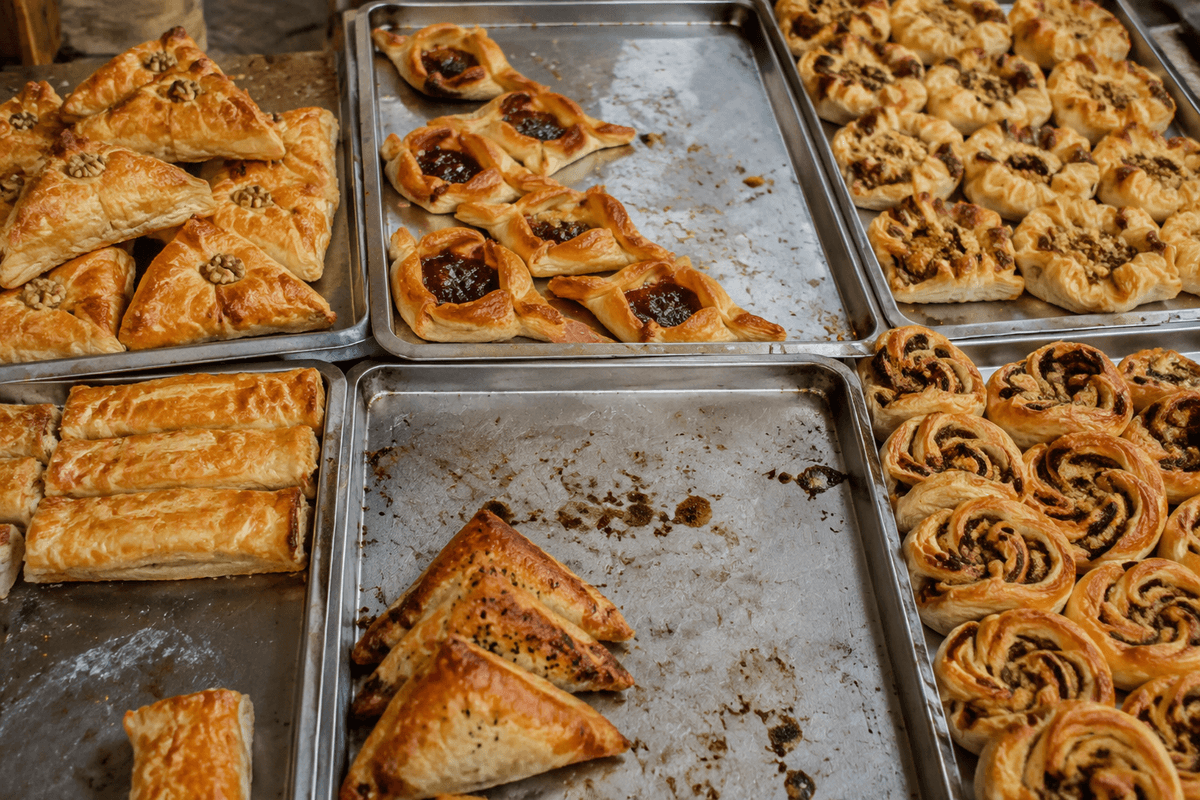
The moment that finally solved breakfast for me was watching a woman ahead of me buy two loaves, press one gently (to check the crust), and walk away without a second glance—so I copied her. Start with puri or shotis puri (the canoe-shaped loaf you’ll see everywhere): it’s cheap, filling, and it travels well in a bag while you keep shopping. It works best early, when the crust is still crisp; later in the day it can go soft and feel like a lot of bread for not much joy. If you’re solo, don’t overbuy—one loaf is deceptively large, and carrying it all morning turns “local life” into a mild nuisance.
Khachapuri is the obvious target, but it’s easy to mis-time. If you want the gooey, just-baked version, treat it like a planned stop, not an add-on—midday can mean it’s been sitting, and the cheese tightens up. Adjaruli (boat-shaped with egg) is satisfying but heavy; it’s better when you can sit down immediately, because walking with it gets awkward fast. I found Imeruli (a flatter, enclosed cheese bread) more forgiving for a market morning: less mess, still rich, and easier to split as a couple.
For pastries, look for smaller pieces you can mix and match—something walnut-filled or jammy for sweetness, and one savory option to balance it. The limitation is selection: the best-looking tray often empties early, and the later refill can be more bread-like than flaky. When you’re unsure, point and ask for one piece (“erti”) rather than committing to a box; it keeps the experiment cheap and stops you from ending up with three identical pastries you don’t actually love.
How to shop: etiquette, language, prices
The first awkward moment I had was at a cheese stall where I reached for a sample and realized I’d misread the choreography: people weren’t helping themselves, they were waiting to be handed a taste. In most markets, you’ll do better by hovering half a step back, making eye contact, and pointing rather than touching—especially with bread, herbs, and anything laid out loose. Queueing can be fluid (more “who’s next?” than a strict line), so a small nod or a quick “me next?” gesture works better than standing rigidly in place and hoping order appears.
Language-wise, you don’t need full Georgian, but you do need a few anchors. “Gamarjoba” (hello) softens everything; “erti” (one) and “ori” (two) keep purchases simple; and “madloba” (thank you) lands well even if your accent is shaky. If you’re stuck, switch to numbers with your fingers and point—vendors are used to it, and it’s faster than fishing for Google Translate in a narrow aisle while other shoppers squeeze past.
Prices are usually mid-range-friendly if you keep portions realistic: bread and small pastries are cheap enough that the main risk is overbuying because everything looks like a “good deal.” Cards sometimes work, but cash is the smoother default for markets; breaking a large bill can slow things down when a stall is busy. I’d rather carry a little change and pay quickly than save a few lari and spend my social energy on a payment hiccup.
Build a simple market-to-bakery walking route
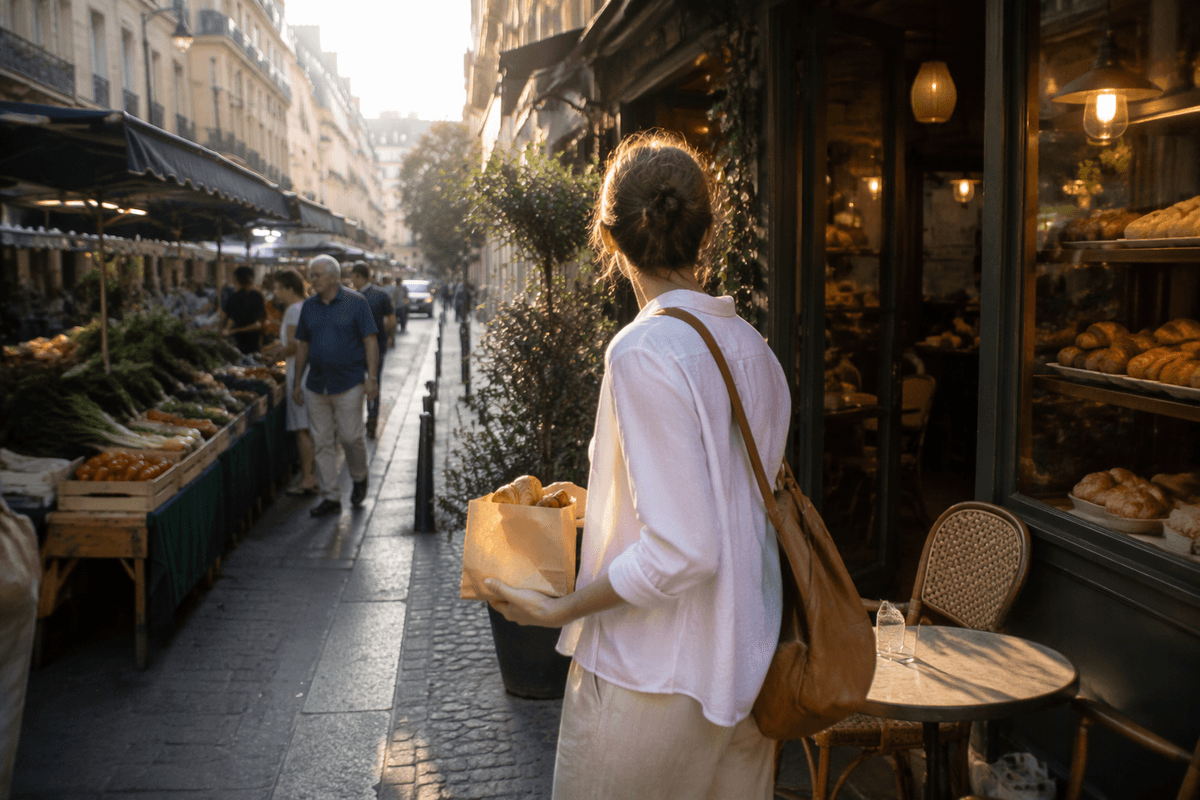
I built my easiest “no-regrets” morning by resisting the temptation to zigzag across town: pick one market you can reach in 15–25 minutes on foot from where you’re staying, then choose a bakery/café that’s another 10–15 minutes onward in the same direction. It sounds obvious, but it’s the difference between feeling like you’re slipping into daily life and feeling like you’re doing errands in a city you don’t yet read. If you start too late, that same distance becomes tiring fast—sidewalks narrow, traffic is loud, and carrying bread turns from charming to cumbersome.
Inside the market, keep your route tight: one loop for produce and cheese, then straight to bread/pastries, then exit. What works well is buying “walkable” items first (a small pastry, a piece of fruit) and saving anything messy or heavy (khachapuri, big loaves, liquids) for the end so you’re not babysitting a bag while you browse. If you’re a couple, split tasks—one pays, one holds the bag—because stalls can move quickly and you’ll lose your place if you pause to reorganize.
Finish at a bakery with seating so you can actually eat while it’s at its best; a takeaway-only spot is fine, but it pushes you into the next problem: finding a clean place to sit that isn’t directly on a busy road. If the walk back feels long, call it—grab a taxi or metro for the return and keep the “local” part focused on the market, not on trudging home with cooling bread.
Leave with tastes—and confidence navigating local life
On my last market morning, the only real decision left was whether to do “one more lap” for curiosity or just pay, eat, and leave with the win. That’s the point you want to reach: when you can buy bread without overthinking it, say a quick “gamarjoba,” point, pay in cash, and move on without feeling like you’re interrupting someone’s day. If you’re still anxious, keep it small—one warm puri, one pastry, one piece of fruit—and you’ll learn faster than you will by trying to order a complicated spread.
What sticks with you isn’t a checklist of stalls; it’s the mini-competence. You’ll start recognizing when trays have just been refilled (and when you’re too late), which purchases survive a 15-minute walk, and when it’s worth sitting down immediately because the cheese will tighten if you wait. Before you leave Tbilisi, repeat your best route once more—same timing, fewer detours—so you walk away with the flavors and the calm confidence that you can do daily life here, not just visit it.