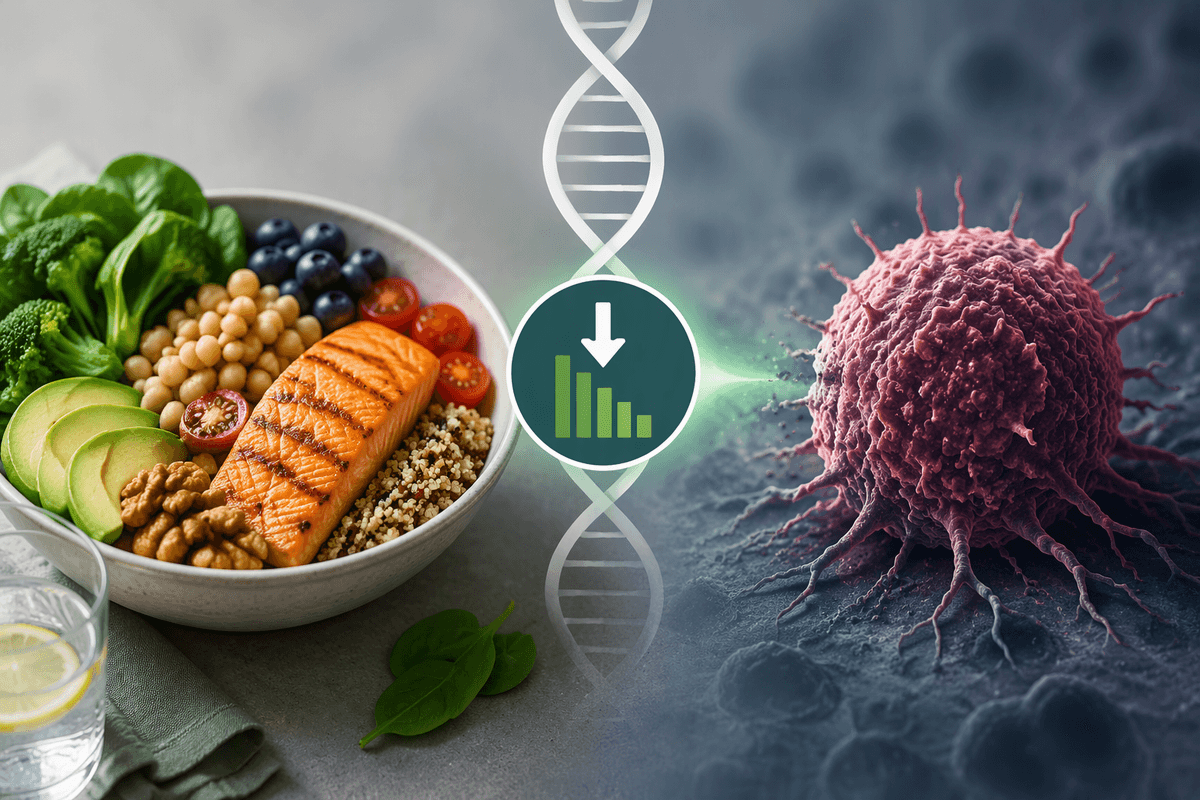
Why One Food Cannot Silence Cancer Genes
It can sound reassuring to hear that a certain food “downregulates” a cancer-related gene. But that phrase may describe a limited laboratory finding rather than a change in the cancer itself. Cells can alter which genes are more active in response to nutrients, hormones, inflammation, or changes in metabolism. That does not mean a food has removed a cancer-driving mutation, stopped every pathway involved in tumor growth, or reversed metastatic disease.
The gene activity is only one part of a much larger process. Tumors contain different groups of cells, and those cells may respond unevenly to the same conditions. Food also reaches the body through digestion, absorption, medication effects, appetite changes, and overall nutritional status—not as a concentrated treatment delivered directly to a tumor. A healthier eating pattern may support energy, strength, blood sugar control, or treatment tolerance, but those benefits are not a reliable readout of what cancer cells are doing. The claim may begin with a real biological effect and end with a conclusion the evidence cannot support.
Metastasis Depends on More Than Gene Activity

A scan result or new symptom can make the phrase “gene activity” feel like the missing explanation. Yet metastasis involves several interacting steps: cancer cells must survive, move through surrounding tissue, enter the bloodstream or lymphatic system, settle in another organ, and grow within a new environment. Gene expression can influence some of these behaviors, but it is not the only factor. Blood supply, immune responses, tissue conditions, treatment pressure, and differences between tumor cells may also shape what happens.
That is why a food-related change in a laboratory marker cannot be treated as evidence that metastatic cancer has slowed or become less capable of spreading. Even when eating patterns affect inflammation, insulin levels, digestion, or other metabolic signals, the effect may be modest, inconsistent, or unrelated to the behavior of a particular tumor. Changes in appetite, weight, or energy can add further confusion, especially during treatment. Nutrition may support the body’s needs, but it does not provide a dependable window into whether metastasis is progressing.
What Nutrition May Influence Beneath the Surface
After a meal, the body may show changes long before anything meaningful can be inferred about a tumor. Nutrients can influence blood sugar, insulin, inflammation, gut activity, and the availability of energy to different tissues. These shifts may affect chemical signals that help regulate gene expression, including whether certain genes are more or less active for a period of time. That is a plausible reason nutrition research sometimes reports “downregulation” without showing that a tumor has stopped growing.
These effects are difficult to separate from the rest of a person’s condition. Medications, reduced appetite, weight loss, sleep, stress, and treatment-related inflammation can all change the same signals. A dietary pattern may also be hard to follow consistently when nausea, taste changes, diarrhea, or fatigue are present. Even if a metabolic marker improves, that does not show that metastatic cells have lost their ability to survive or spread. Nutrition may influence the environment around cancer, but its effects are usually indirect, variable, and not a dependable measure of tumor behavior.
The Evidence Gap Between Cells And Patients
The result that looks convincing in a dish can become much less clear once it reaches a person. Researchers may expose cancer cells to a concentrated compound, observe a change in gene expression, and describe the affected gene as “downregulated.” In everyday eating, however, the same compound may be present at a lower amount, broken down during digestion, or never reach the tumor at a meaningful level. The cells in a laboratory also lack the medication schedule, immune responses, organ differences, and treatment-related stress found in a patient.
Human studies face another problem: people who eat differently often differ in many other ways, including activity, weight, access to care, smoking history, and treatment choices. An association between a dietary pattern and a blood marker therefore cannot prove that food caused the change, much less that metastatic disease was reversed. Even a promising clinical signal may apply only to a particular cancer, treatment, or group of patients. The gap does not make nutrition research useless; it makes the wording important. A laboratory finding may justify further study without becoming a dependable prediction of what a meal will do inside one person’s tumor.
When A Healthy Diet Creates New Confusion
After adopting a healthier eating pattern, it can be tempting to look for proof that it is changing the cancer. A steadier appetite, improved blood sugar, or more energy may feel encouraging, but those changes do not show what is happening in metastatic cells. The opposite can also be confusing: treatment-related nausea, weight loss, or fatigue may continue even when meals are carefully planned. Body-wide effects and tumor behavior do not always move together.
This creates a difficult interpretation problem. If a person feels better, food may receive more credit than the evidence allows; if symptoms worsen, the diet may be blamed unfairly. Some eating patterns can support strength, hydration, bowel regularity, or the ability to tolerate treatment, while still having little measurable effect on cancer-related gene activity. Trying to make every symptom or lab value confirm a nutrition claim can also add pressure at a time when eating is already difficult. A healthy diet may be worthwhile for practical reasons, but it should not become a daily test of whether treatment is working.
Balancing Food Choices With Cancer Treatment

A carefully chosen meal still has to fit around the realities of treatment. Steroids may raise blood sugar, chemotherapy may alter appetite or bowel habits, and some medicines may interact with supplements or concentrated extracts. In that setting, changing food is not simply a matter of selecting items linked to favorable gene activity. The practical question is whether the eating pattern supplies enough energy, protein, fluids, and tolerable foods without making side effects harder to manage.
It can also be misleading to treat nutrition as a competing treatment plan. A person may feel pressure to follow a restrictive diet, delay recommended care, or interpret difficulty eating as a personal failure. Yet food cannot reliably replace therapies designed to reach cancer cells throughout the body, and dietary changes should not be used to judge whether those therapies are working. Oncology clinicians and oncology dietitians can help assess supplements, weight changes, and treatment-related problems in context. The most useful role for nutrition is often supportive and flexible: helping the body cope while cancer treatment remains the main strategy for controlling metastatic disease.
How To Interpret Claims About Gene Downregulation
The wording often changes the meaning. “Downregulated” may refer to a gene-expression measurement in cells, a blood marker, or a pathway affected under specific laboratory conditions. It does not necessarily mean that a cancer-driving mutation has been removed, that metastatic cells have stopped spreading, or that treatment is no longer needed. Before accepting the claim, ask what was measured, in whom, at what dose, and over what period.
It also helps to separate a possible biological effect from a clinical outcome. Food may influence metabolism, inflammation, or short-term gene signals, but those changes may be small, inconsistent, or unrelated to tumor growth on scans. Claims become especially unreliable when they promise that one food can “switch off” cancer. A more careful interpretation is that eating patterns may be one influence on the body’s environment, while tumor behavior must be assessed through appropriate clinical monitoring rather than through meals, symptoms, or a single laboratory result.