Planning Your Lisbon Walking Adventure
Before setting out, look at Lisbon as a series of connected hills rather than a flat walking map. A route from Baixa into Alfama may cover little distance but involve uneven paving, stairs, and slow progress around viewpoints. Graça and São Vicente reward early energy with broader views, while riverside walks in Belém are easier on the legs but less convenient to combine with central neighborhoods.
Plan one demanding climb or a longer stretch per day, then use the metro, tram, or taxi to bridge the gaps. Start early in warmer months, allow extra time for photographs and crowds, and check opening hours before building a route around a museum or monument. A shorter walk that leaves room for detours is usually more satisfying than an ambitious itinerary abandoned halfway uphill.
Baixa and Alfama: Historic Streets
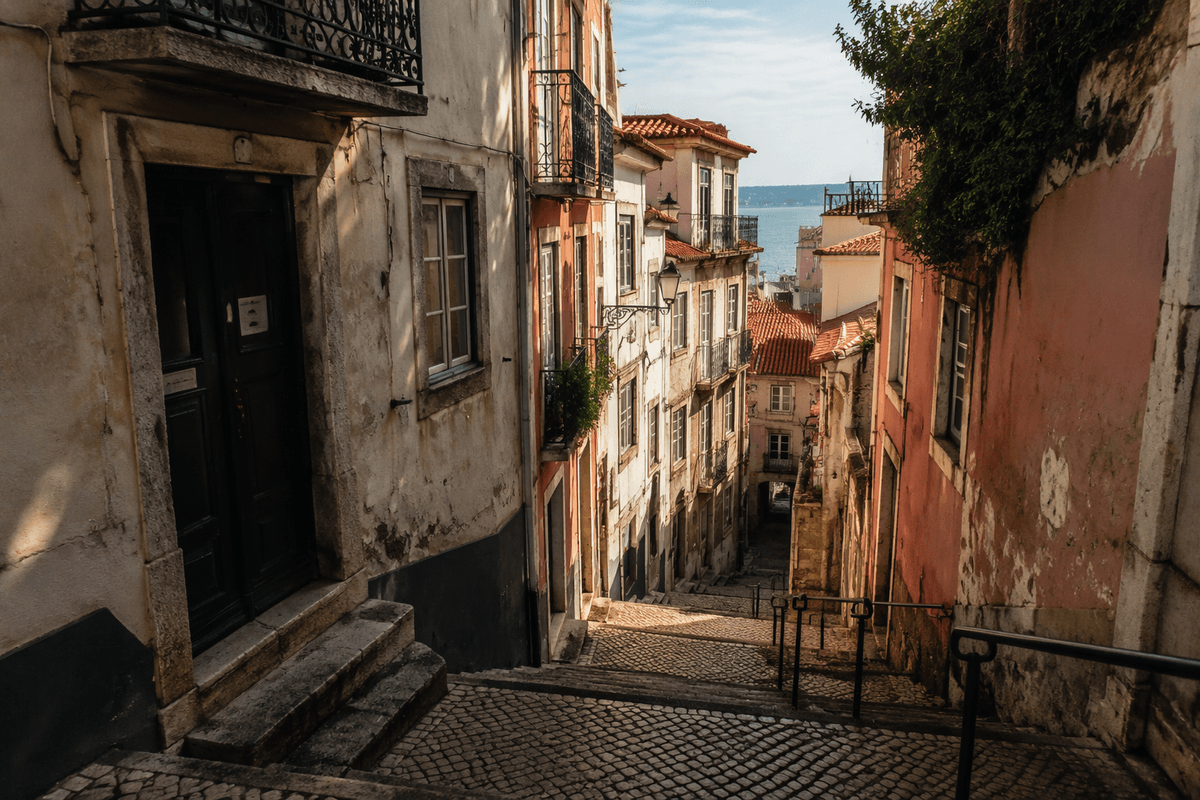
Starting in Baixa gives you the easiest surface and the clearest sense of Lisbon’s formal center. From Praça do Comércio, walk north through the grid toward Rossio, then turn east once the streets begin narrowing toward Alfama. This opening section is mostly manageable, but busy pavements, tuk-tuks, and frequent photo stops can make the short distance surprisingly slow.
Alfama is more atmospheric but demands more patience. The route quickly becomes uneven, with stairs, blind corners, and steep lanes leading toward viewpoints such as Santa Luzia and Portas do Sol. It works well as a gradual afternoon exploration, especially if you pause for the cathedral or a small café, but it is inefficient to treat every lane as a through-route. If your legs are already tired, take transport to the upper edge and walk downhill instead. Allow at least half a day if you want to explore beyond the main viewpoints; otherwise, connect Baixa and Alfama selectively rather than trying to cover the entire hillside.
Graça and São Vicente: Elevated Perspectives
From Alfama, the climb toward São Vicente and Graça is where Lisbon’s topography becomes impossible to ignore. The route passes the National Pantheon and São Vicente de Fora before rising toward viewpoints such as Senhora do Monte, with broad city and river views that justify the effort. It works best early in the day, when the light is softer and the streets are quieter; later, heat, tour groups, and crowded lookout platforms can make the steep sections feel longer than expected.
Graça is a better place to slow down than to rush through. Allow time for a café or a short detour, but avoid adding every nearby viewpoint unless you are comfortable with repeated climbs. If the ascent from Alfama feels excessive, use a tram or taxi to reach Graça, then walk downhill through São Vicente. That approach sacrifices some route continuity but preserves energy for the neighborhoods and viewpoints that follow.
Chiado and Bairro Alto: Culture and Atmosphere
Chiado offers a more manageable walking reset after Graça’s climbs. From Rossio or Baixa, its streets rise gently toward cafés, bookstores, theaters, and the ruins of Carmo, so the area works well when you want culture without committing to another steep hillside. Rua Garrett and the lanes around Praça Luís de Camões can become slow, particularly in the afternoon, when browsing and photo stops turn short distances into longer ones.
Bairro Alto is best treated as a compact evening extension rather than a separate day. Walk through Chiado before dinner, then explore the quieter upper lanes and viewpoints near São Pedro de Alcântara, but expect cobbles, narrow pavements, and a livelier atmosphere after dark. If you are already tired, skip the extra grid of Bairro Alto streets and descend by foot toward Cais do Sodré, or use transport to save energy for the riverside and nightlife.
Belém and Alcântara: Riverside Walking
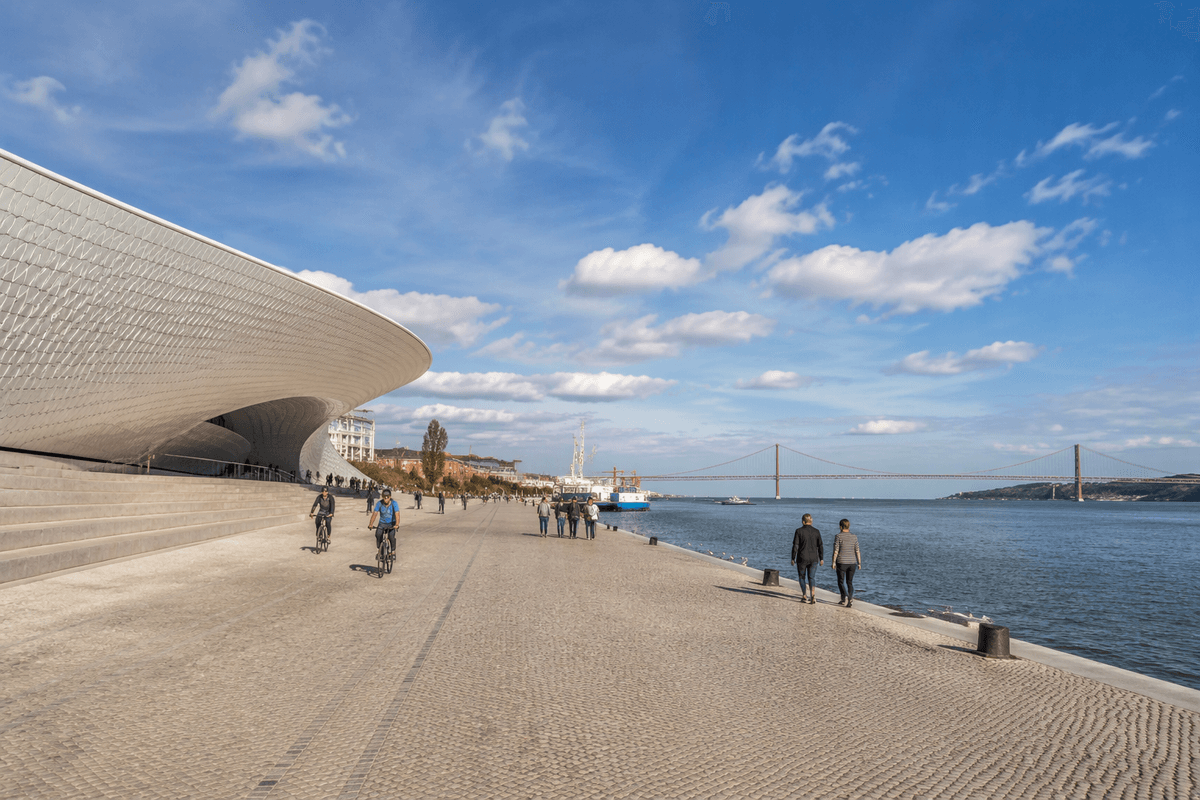
Belém and Alcântara offer Lisbon’s easiest extended walk, with flatter paths, open river views, and more space than the central hills. Start near the monuments and museums in Belém, then follow the waterfront east toward MAAT and Alcântara. The distance is manageable, but sightseeing quickly expands the schedule: queues, museum opening times, and photo stops can turn a two-hour walk into most of a day.
The riverside route works best in mild weather, when the breeze and broad pavement make the effort feel lighter. In strong sun, however, shade is limited, and the exposed path can become tiring. Alcântara adds restaurants and the activity around LX Factory, but it is not essential if time is short. Use tram or taxi in one direction, then walk the more scenic section back, rather than spending energy retracing the entire waterfront.
Choosing Routes That Fit Your Day
By the final morning, compare routes by effort rather than distance. Pair one demanding hillside, such as Graça or Alfama, with a compact central neighborhood, while keeping Belém and Alcântara as a flatter alternative when heat or fatigue changes the plan. This balance leaves time for museums, meals, and the delays created by crowds.
Use transport whenever it removes a steep or repetitive section, not when it cuts out the most distinctive walking. Check opening times before committing to a museum-led route, and split long days at a café or viewpoint. A realistic itinerary may cover fewer streets, but it will show you more of Lisbon.