Why Bologna’s History Comes Alive On Foot
Bologna’s history becomes easier to appreciate when its landmarks are connected on foot rather than visited as separate stops on a map. Medieval streets, long porticoes, historic squares, and university buildings reveal how the city developed over centuries, often within a relatively compact area. Walking between these places also brings attention to architectural details and everyday scenes that are easy to overlook when traveling directly from one attraction to another. For first-time visitors, understanding how the streets and landmarks relate to one another adds depth to the experience.
Joining a guided walking tour provides historical context, helps organize the route, and saves time deciding which streets and sights deserve attention. The cost may be higher than exploring independently, and a fixed schedule offers less freedom to linger or change direction. Larger groups may also move at a pace that feels uncomfortable during hot weather or busy periods. Choosing between a guide and a self-guided walk depends on whether historical explanations and efficient routing matter more than flexibility. Either way, allowing time for pauses beneath the porticoes, visits to local cafés, and unplanned discoveries makes exploring Bologna more rewarding.
Medieval Streets, Towers, And Porticoes
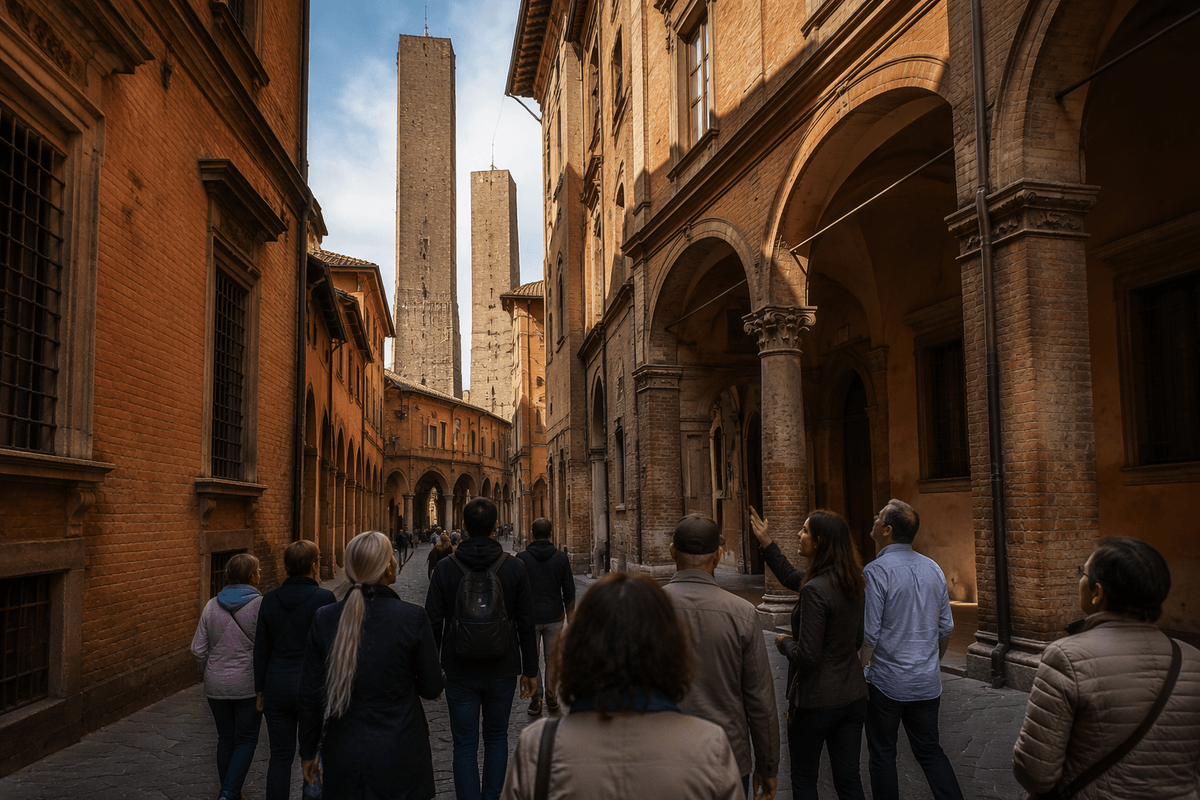
The medieval center is most rewarding when the route links details rather than isolated landmarks. A guide can explain how the Two Towers once signaled elite power, why narrow streets suited trade, and how porticoes made movement possible in rain and summer heat.
That context comes with practical limits. Routes often cover uneven paving and several kilometers, while crowded lanes can slow a group and make photography awkward. Exploring independently costs less and allows pauses, but you may spend valuable time navigating between sights without understanding how they connect. For a short visit, a compact tour that includes the towers, the Quadrilatero, and selected porticoes usually offers stronger historical value than trying to cover the entire center alone.
University Life And Intellectual Traditions
Near the university quarter, the city’s history becomes more intellectual than monumental. A knowledgeable guide can connect lecture halls, former colleges, and student traditions to Bologna’s reputation as Europe’s oldest university city, turning ordinary façades into evidence of changing ideas and social power.
This is where a guided walk earns its cost, especially if your time is limited or you want more than dates. The trade-off is pace: university landmarks are spread through busy streets, and a large group may limit conversation or make interiors inaccessible. Independent visitors gain flexibility, but a focused tour in a small group usually delivers deeper context with less searching.
Stories Behind Squares And Hidden Details
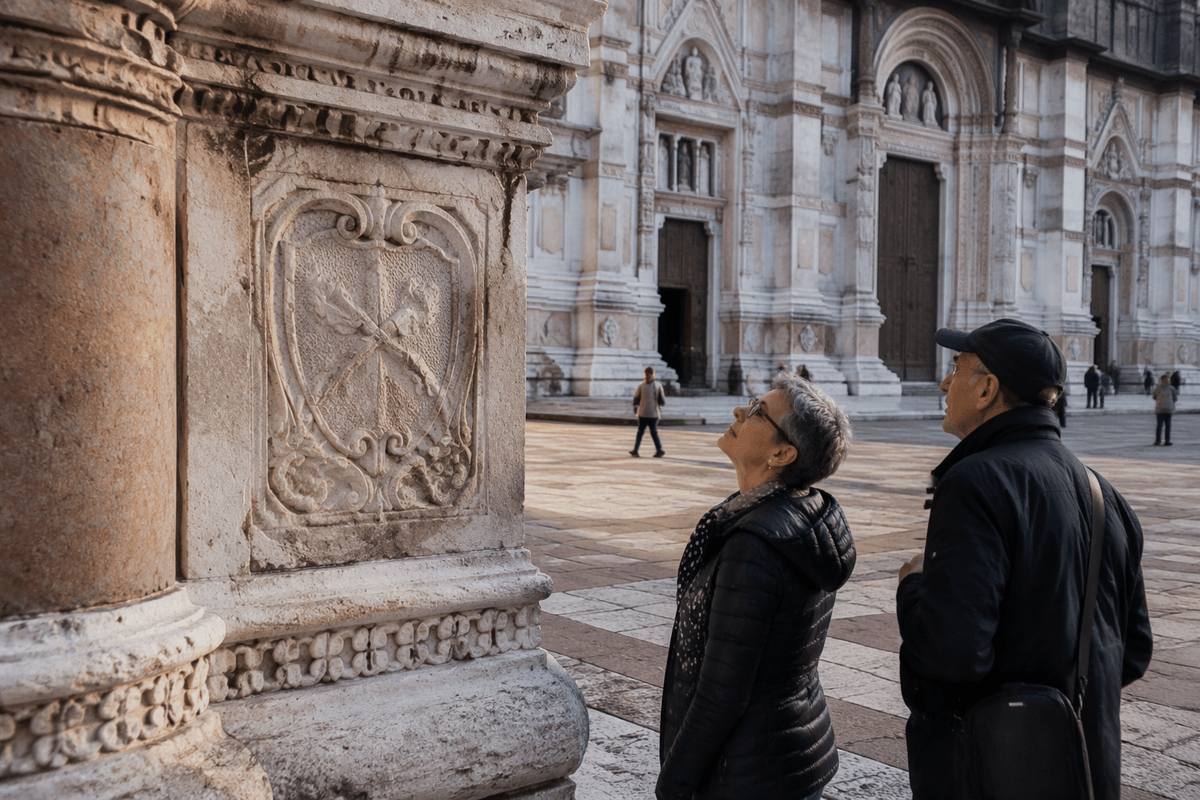
In Piazza Maggiore, the useful stories are often the details visitors pass without noticing: a carved symbol on a façade, a change in paving, or the way the square’s buildings reflect competing civic and religious authority. A guide can make these clues meaningful quickly, while an independent walk allows you to linger, photograph, or detour into the Quadrilatero without holding up a group.
Hidden corners reward curiosity but rarely fit neatly into a tight schedule. A small-group tour is more likely to explain overlooked courtyards and canals without losing time, though fixed routes may skip places you want to explore. If crowds, heat, or limited energy are concerns, choose a shorter walk with clear route details rather than paying for breadth you will not comfortably enjoy.
Choosing The Right Walking Tour Experience
At booking, compare more than the headline price. A two-hour small-group tour may cost more than a self-guided route, but it usually offers better questions, steadier pacing, and fewer missed connections. Check the language, maximum group size, meeting point, cancellation terms, and whether interiors are included; “historic Bologna” can otherwise mean a broad exterior-only circuit.
Early walks avoid the worst heat and crowds, while late starts may suit a slower itinerary but leave less room for detours. If uneven streets or fatigue are concerns, choose a shorter route with clear stops rather than a comprehensive tour that becomes a race.
A More Meaningful Way To Experience Bologna
Choosing how to explore Bologna depends on what matters most during your visit. A guided walking tour suits travelers who want historical context, a well-planned route, and explanations that connect the city’s medieval streets, university landmarks, and distinctive porticoes. Exploring independently costs less and allows more freedom to stop at a market, linger in a quiet square, or follow an interesting street without watching the clock. Consider how much time you have, how deeply you want to explore the city’s history, and whether a fixed schedule would enhance or limit the experience.
Whichever approach you choose, give yourself time to appreciate Bologna beyond its main attractions. Walk beneath the porticoes, look closely at the façades, and notice how historic buildings, university life, local shops, and cafés share the same streets. Pausing for a regional meal or wandering through a less crowded square may reveal as much about the city as visiting another famous landmark. Rather than trying to cover every sight, focus on understanding how Bologna’s architecture, history, and everyday life fit together. A slower, more thoughtful visit often leaves a stronger impression than a packed sightseeing schedule.