Set expectations; MD: priorities; OPT: buffer time; SKIP: overplanning
On a 7-day loop out of Cape Town, the first friction point is psychological: the Garden Route looks short on a map, but it’s a chain of “quick stops” that quietly turn into long days once you add parking, viewpoints, and late lunches. For a couple in your 30s on a mid-range budget, I’d treat this trip as a sequence of two-night anchors (so you’re not repacking every morning), with one big activity per day as the non-negotiable.
MD (must-do): decide your priorities up front—scenery towns (Wilderness/Knysna/Plett) or a wildlife detour (Addo). You can do both, but not at full speed without feeling it in the car. OPT: build a real buffer: one lighter afternoon for a beach walk, a nap, or a slow dinner when the weather flips. SKIP: overplanning micro-stops; the best moments often happen when you pull over once, properly, instead of five times halfway.
D1 CT→Mossel; MD: coastal drive; OPT: beach; SKIP: long stops
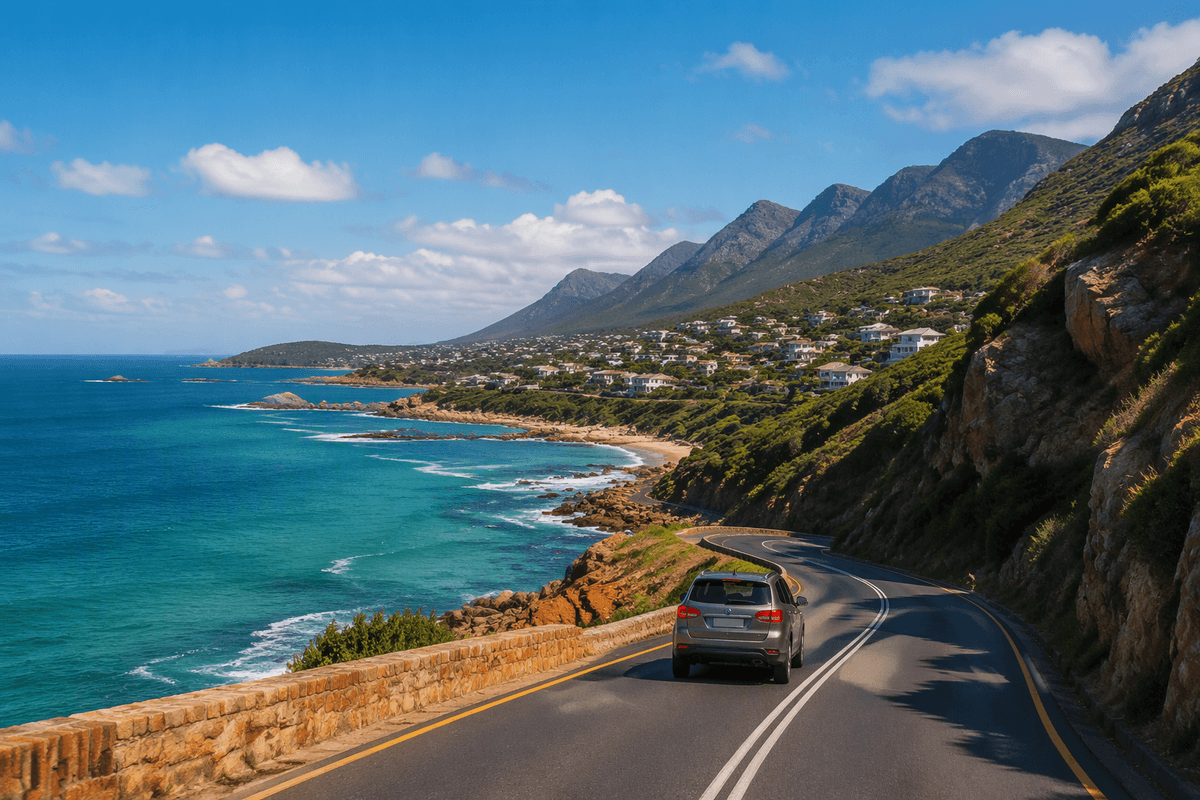
The first real decision comes as you leave Cape Town: do you take the faster N2 and “start the holiday tomorrow,” or commit to the coastal R44/R43 and accept that you’ll arrive in Mossel Bay later—but happier. For a first-time visit, I’d choose the coastal drive if the weather is clear, because it’s the day where the scenery does most of the work and you don’t need to book anything to feel like you’re getting value.
MD (must-do): pick one coastline stretch and do it properly—either the R44 via Gordon’s Bay to Betty’s Bay/Hermanus, or (if you’re already behind) bail to the N2 and save your energy for later days. The road is easy, but it’s slow in practice: small towns, lower speeds, and the constant temptation to stop. If you push too hard, you’ll arrive fried and the “easy” first night becomes a logistical slog (check-in, dinner, unpacking) instead of a reset.
OPT: if you hit Mossel mid-afternoon, a short beach walk near Santos Beach works because it’s simple parking and low effort after a long seat-day. SKIP: long sit-down lunches and stacked detours—this is the day where time slips quietly, and Mossel is better used as a clean overnight than a late-night scavenger hunt for one more viewpoint.
D2 Oudtshoorn; MD: Cango Caves; OPT: ostrich farm; SKIP: extra driving
The morning we turned inland toward Oudtshoorn, the temptation was to treat it like a “bonus day” and add every pass and viewpoint on the route. It sounds manageable until you realize the Klein Karoo distances are honest, not coastal—fewer towns, fewer bailout cafés, and the heat makes stops feel slower. If you’re coming from Mossel Bay, aim to arrive early enough that you’re not choosing between a cave tour and dinner.
MD (must-do): book Cango Caves in advance and pick the tour that matches your tolerance for tight spaces. The longer “Adventure” style options can be memorable, but if you’re even slightly claustrophobic (or just stiff from driving), the standard tour lands better and doesn’t leave you wiped out for the evening. The caves are also one of those places where arriving late can quietly downgrade your day—sold-out time slots mean you’re either waiting around or rushing through town after.
OPT: an ostrich farm visit works best as a short, structured add-on because it breaks up the day without turning into another drive. SKIP: extra loops out to Swartberg Pass or Prince Albert unless you’re deliberately sacrificing downtime; the scenery is excellent, but the return mileage can turn a fun detour into a late, slightly cranky check-in.
D3–4 Wilderness/Knysna; MD: lagoon walk; OPT: viewpoints; SKIP: mall time
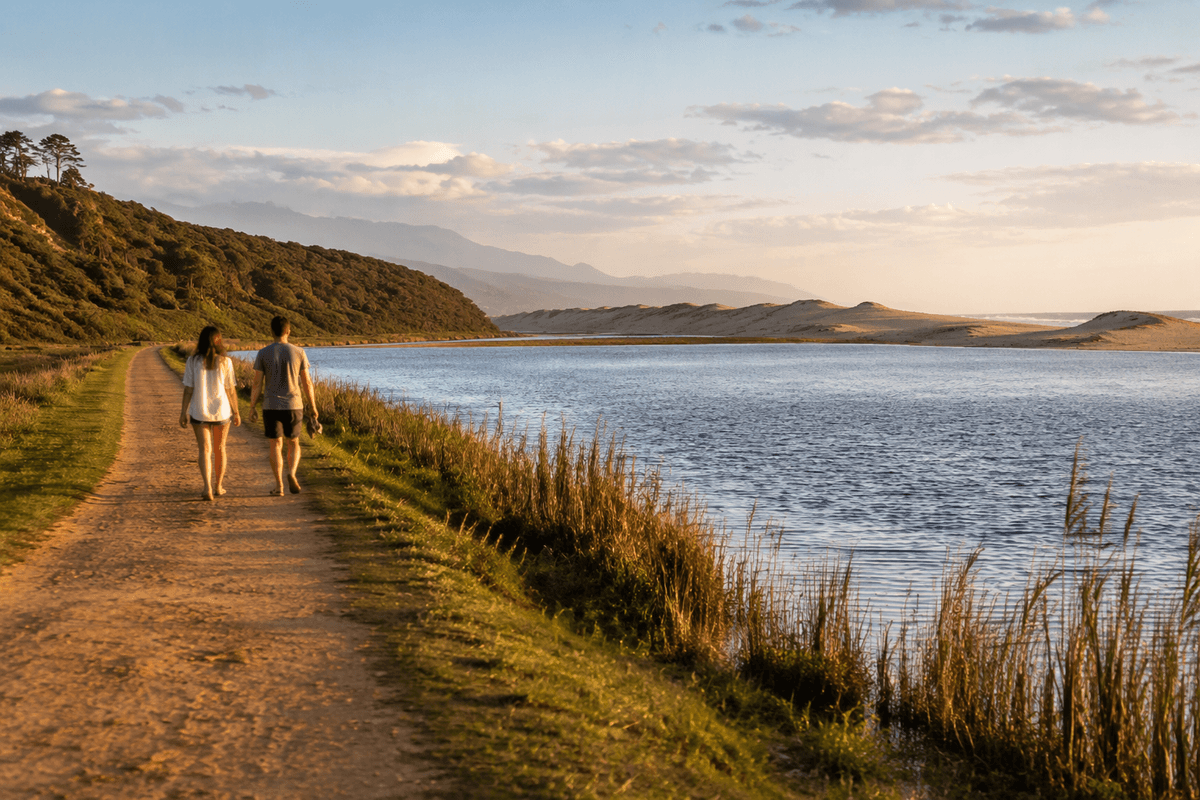
By the time we rolled back toward the coast, the choice wasn’t “Wilderness or Knysna?” so much as “where do we want to be stuck if the weather turns?” Wilderness feels quieter and more walkable when you’re tired, while Knysna is more convenient for dinners and day trips—but it also comes with more traffic friction around peak hours. For two nights, I’d pick one base (not both) and accept that you’ll drive a little either way, because repacking for a one-night hop here usually costs more energy than it saves.
MD (must-do): do a lagoon/estuary walk in Wilderness when you can still move easily—late afternoon light is great, but winds can make it feel colder than expected even in “nice” seasons. It’s the kind of outing that works on a low battery: flat, scenic, minimal logistics, and you can turn back whenever time starts slipping.
OPT: add one viewpoint stretch (Map of Africa is the classic quick win, or a short hop up to a lookout near Knysna Heads) and treat it as a timed stop, not a roam-until-hungry mission. SKIP: burning a prime daylight window in malls or shopping villages—if the forecast is clear, this is the section of the trip where your scenery-per-hour ratio is at its best.
D5 Plettenberg; MD: Robberg hike; OPT: wineries; SKIP: crowded beaches
We hit Plettenberg Bay with that familiar mid-trip question: do you push for another activity, or protect your legs for what you actually came for? For us, the anchor was Robberg Nature Reserve, and the only “planning” that mattered was starting earlier than felt necessary. Parking and entry are straightforward, but the trail experience changes fast—midday heat, wind on the peninsula, and a busier footpath that turns narrow sections into a stop-start shuffle.
MD (must-do): pick the Robberg route that matches your energy, not your ambition. The shorter loop still delivers cliffs, sea views, and that satisfying end-of-hike calm without turning the afternoon into recovery time. If you commit to the longer circuit, bring more water than you think and accept that it’s a half-day decision; trying to squeeze it between a late breakfast and a sunset plan is how you end up rushing the best bits.
OPT: if you want a softer finish, aim inland for a winery tasting rather than “just one more beach.” It’s easier to time-box, and you won’t spend your patience hunting for parking. SKIP: the most central, popular beaches at peak hours—nice sand, yes, but the crowding can make the whole stop feel oddly effortful for what should be your downtime.
D6–7 Tsitsikamma+return; MD: Storms River; OPT: Addo; SKIP: big backtracks
At Tsitsikamma, the first decision hits before you’ve even parked: are you here for a quick, iconic hit, or are you trying to “do the whole park” in a single morning? The Storms River Mouth area is the cleanest win—short driving, clear signposting, and you can scale effort up or down depending on weather and how your legs feel after Robberg. It also fills up fast, so arriving earlier isn’t about being virtuous; it’s about not turning a nature stop into a queue-and-shuffle experience.
MD (must-do): prioritize the Storms River Mouth walk(s) and pick one main trail rather than collecting half-starts. The suspension bridge route is high-reward for relatively low commitment, but wind and mist can make it feel colder and more exposed than you expect on the coast. If conditions are rough, treat it as a “do the viewpoint, get the photos, leave” stop—forcing a longer hike in sideways rain is how you burn your best energy on the wrong day.
OPT: Addo only works if you’re willing to pay with time: it’s a real detour that can turn D6–7 into a late-night drive back west. If wildlife is a top-two priority, consider an early exit from the Garden Route and sleep closer to Addo; if it’s a “nice-to-have,” stay coastal and keep the return calmer. SKIP: big backtracks for one extra lookout—this is where a 30-minute “quick stop” quietly becomes an hour you’ll miss at dinner.
Wrap-up choices; MD: savor; OPT: extend; SKIP: rushed return
On the last morning, we stared at the map with that end-of-trip itch to “use every hour,” and it helped to admit what our bodies already knew: one more long coastal meander sounds romantic, but it’s also the easiest way to arrive back in Cape Town irritated, hungry, and hunting for fuel with zero patience.
MD (must-do): choose a finish you can savor—either a final slow breakfast and one short walk (Storms River area if you’re still east, or a quick beach/lagoon stretch if you’re already back toward Wilderness), then commit to the drive. If you’re flying soon after, build a real buffer for traffic and car return logistics; the road can be smooth and still feel long when you’re tired.
OPT: if you can afford it, add one extra night (anywhere between Wilderness and Plett) and turn the loop into something you inhabit, not just complete. SKIP: the rushed return day that tries to squeeze in Addo, Tsitsikamma, and a sunset dinner back in the city—on a 7-day clock, that’s how a great trip ends in a blur.