Why Istria’s small towns feel worth the detour
We hesitated the first morning: stick to the coast where everything is easy, or burn an hour chasing a hilltop dot on the map. In Istria, that “detour” is usually the point—because towns change personality every 20–40 minutes of driving, and you can feel it immediately in the streets, views, and menus. The catch is that the prettiest places (Rovinj, Motovun) also absorb the most time once you factor in parking walks and slow climbs.
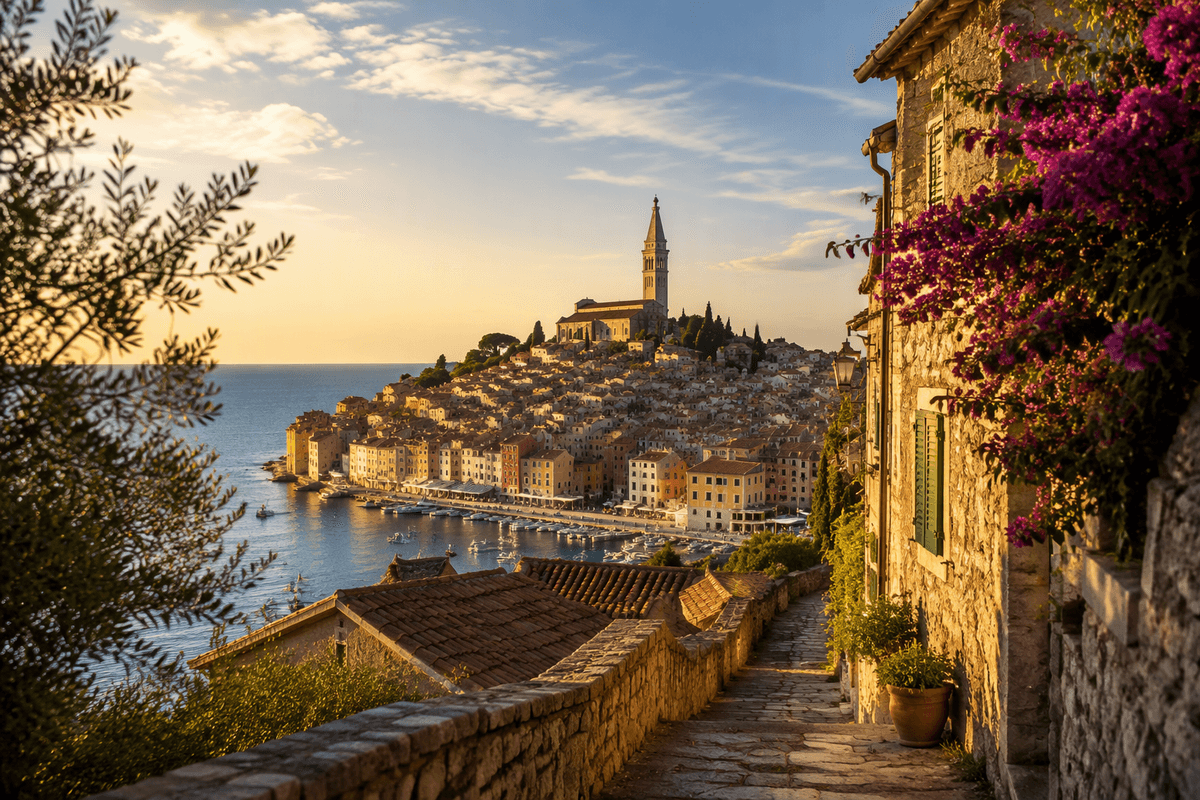
What makes the small towns worth it is how efficiently they deliver a mood: Rovinj for sunset photos and a polished old-town stroll (but crowded by late afternoon), Motovun for that big panorama with a steep approach (and pricier meals), Grožnjan for galleries and a quieter wander (but some shops keep shorter hours), and inland villages like Bale or Svetvinčenat when you want calm without fighting for a spot near the center. If you’re booking last-minute, the detour logic is simple: day-trip the biggest names, sleep in a less-famous base to keep the driving low-stress.
How to pick: coast vs hilltop vs inland
We made the decision by asking one slightly unromantic question each morning: do we want our “best hour” today to be at golden light by the sea, or a view from above? The coast (Rovinj, Vrsar, Novigrad, Fažana) is easiest on energy—flatter walks, predictable roads, and you can reset with a swim—but it punishes you on parking and crowds if you roll in after lunch.
Hilltop towns (Motovun, Grožnjan, Buzet) are the opposite: the drive is slower, the walk is steeper, and you’ll feel every extra stop, yet they’re where Istria looks most unreal in photos—especially late afternoon. If you’re choosing just one hilltop base last-minute, I’d prioritize the one that makes you linger even if dinner plans slip (Motovun for the big view, Grožnjan for a quieter wander).
Inland villages (Bale, Svetvinčenat, Vodnjan) are your pressure-release valve: less hunting for a spot, less tourist markup, and better odds of a calm meal when the coast is heaving—just don’t expect that waterfront evening stroll. We treated them as the “flex” layer between two bigger anchors, not as a full day unless the weather turned.
Coastal charm: Rovinj, Vrsar, Novigrad, Fazana
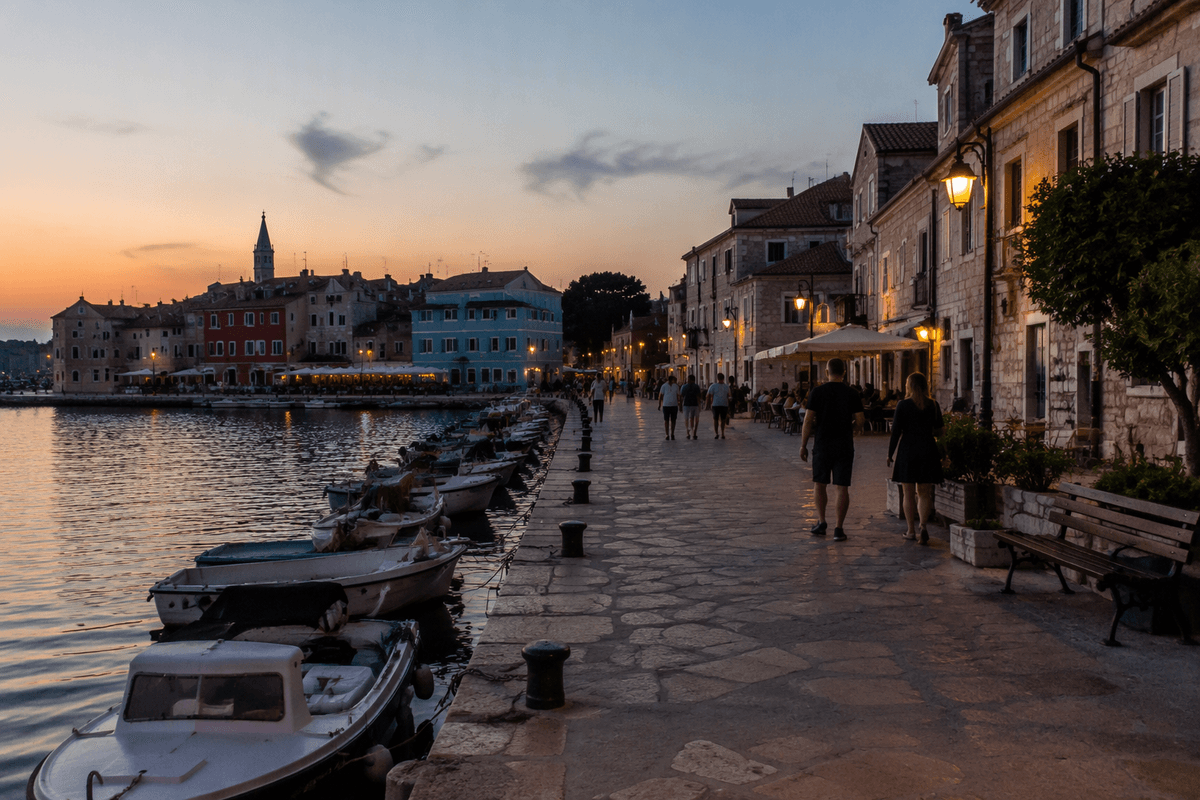
The first time we aimed for Rovinj “just for a quick walk,” we learned the coastal rule fast: the town is effortless once you’re inside, but getting inside can chew up your best hour. If you want the classic postcard lanes and harbor glow, it’s the top pick—but treat it like a sunrise or late-afternoon town, not a casual midday stop. Parking is the friction point; if you arrive after lunch, assume a longer walk from a paid lot and a slower start. Worth it for one anchor evening, less fun as a squeezed-in detour.
Vrsar feels like the coastal version of a deep breath: still pretty, still on the water, but generally easier to “do in 60–90 minutes” without feeling rushed. We liked it when we wanted a scenic wander and a low-commitment meal, knowing we didn’t have the patience for Rovinj-level crowd density. Novigrad is the most livable of the bunch—more of a working-town rhythm—so it’s excellent for a relaxed dinner and a promenade walk, but it doesn’t hit the same cinematic high as Rovinj if you’re chasing that one iconic old-town moment.
Fažana is best when it’s serving another plan: a simple waterfront base, a quick sunset stroll, and a shorter drive back if you’ve been bouncing between stops. It’s charming, but the old-town “content” is thinner, so it can feel underwhelming if it’s your only coastal highlight. If you’re booking last-minute and want one coastal sleep spot, I’d choose Rovinj for maximum atmosphere (accepting the parking hassle), or Novigrad for a calmer, easier-paced evening that doesn’t punish you for arriving at an imperfect time.
Hilltop classics: Motovun, Groznjan, Buzet
We hit Motovun on an afternoon when the clouds were doing that dramatic, fast-moving thing over the Mirna Valley—and it was immediately obvious why people build whole days around it. The view is the headline, and it delivers even if you only give it 90 minutes, but Motovun is also the hilltop stop where the logistics can nibble at your mood: you’ll likely park below and walk up, and the steep bits feel longer when it’s hot or you’re carrying a jacket “just in case.” If you’re deciding where to spend real time, Motovun is the one I’d protect for late afternoon into dinner (photos, then a meal), and I’d avoid trying to wedge it between two other towns unless you’re okay with everything feeling slightly rushed.
Grožnjan is the better choice when you want atmosphere without the sense of a conveyor belt. It’s smaller, more of a quiet wander than a checklist, and it rewards unplanned moments—popping into a gallery, stopping when you hear music, lingering on a view you didn’t expect. The catch is that if you arrive too early in the day, it can feel sleepy; we liked it most when we needed a softer landing after a busy coastal morning.
Buzet surprised us as the “practical” hill town: less of a single iconic overlook, more of a real place you can navigate without fighting for every meter. It’s a solid pairing with truffle country and makes sense as a lower-stress stop when Motovun feels too obvious or too crowded—but if you only have room for one hilltop classic, Buzet probably won’t be the one you remember in your photos. For five days, I’d pick Motovun as the must-do view, add Grožnjan if you want a calmer second hill stop, and treat Buzet as a swap-in when time or parking patience runs thin.
Food-and-wine villages: Bale, Svetvincenat, Vodnjan
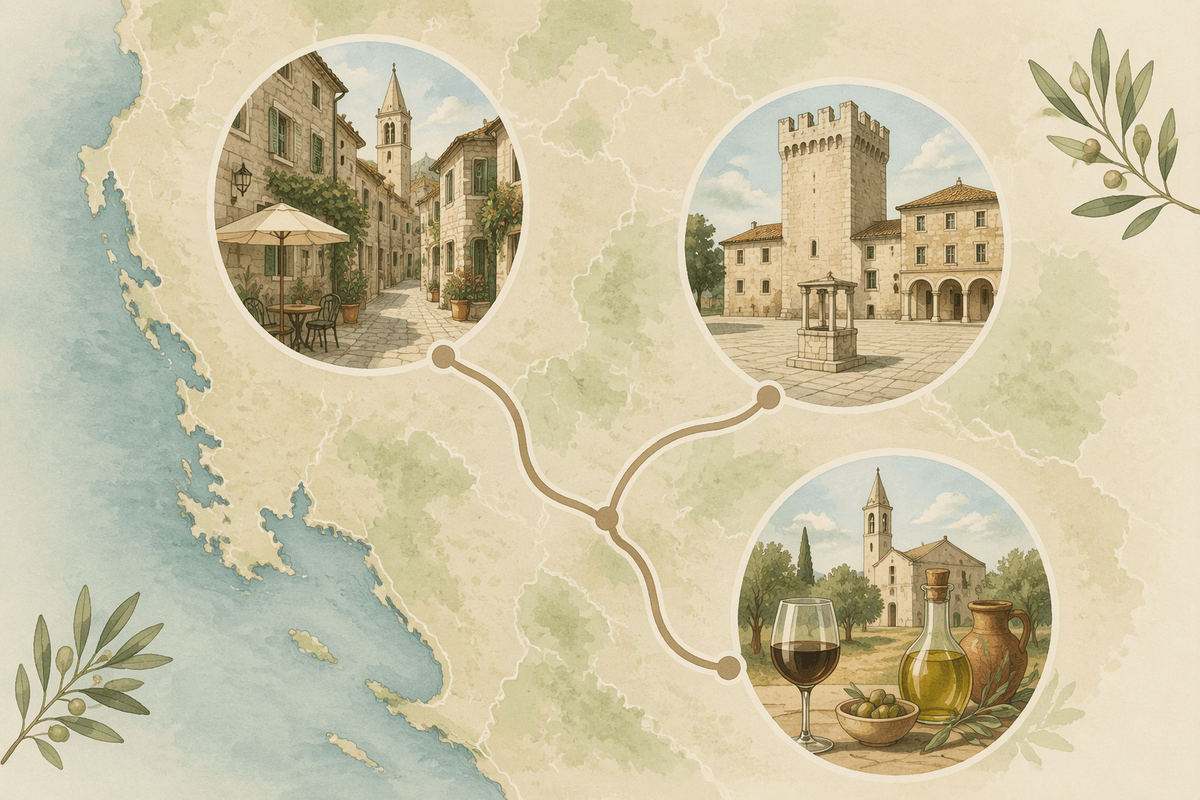
We reached Bale on a day when we were over the coastal parking roulette and wanted somewhere that would still photograph well without feeling like a performance. Bale is small enough to “finish” quickly, which is both the perk and the limitation: it’s ideal for a slow coffee, a short loop through stone lanes, and a low-effort reset, but it won’t carry a whole afternoon unless you’re intentionally moving at Istrian speed. If you’re choosing where to spend money on a nicer meal, Bale can be a smart pick because you’re not paying the Rovinj premium—just don’t expect a big evening buzz afterward.
Svetvinčenat (Savičenta) is the one I’d pick when you want structure: a compact old center anchored by the castle, easy to understand on arrival, and generally less stressful for a quick stop between bigger towns. It works especially well if one of you likes history and the other is guarding energy—there’s enough to justify the detour, but not so much that you’ll argue about “one more viewpoint.” The only catch is timing: outside events, it can feel quiet-fast, so it’s better as a 45–75 minute wander than a destination you build the whole day around.
Vodnjan is the most specific of the three—less pretty-little-village, more lived-in town with strong food-and-wine gravity if you’re willing to be a bit intentional. It’s where we’d go when we wanted olive oil tastings or a serious bottle to take back, but it’s not as instantly romantic as Bale, and the atmosphere can feel subdued if you arrive expecting a postcard scene. For a mid-range, last-minute trip, my priority order is Bale for effortless charm, Vodnjan for edible souvenirs, and Svetvinčenat as the clean, low-drama stop that keeps your route realistic.
Build your route and leave room for spontaneity
On day two we finally stopped trying to “win” Istria and instead picked two anchors: one coast sleep (Rovinj for maximum atmosphere, or Novigrad if you hate parking drama) and one hilltop afternoon you protect (Motovun first, Grožnjan second, with Bale/Vodnjan/Svetvinčenat as flexible fillers when energy or crowds wobble).
If you want a low-stress split, do 2–3 nights coastal (Rovinj/Novigrad) with Vrsar or Fažana as short add-ons (often 15–40 minutes driving, but parking can steal that back), then pivot inland for a slower day: Motovun late afternoon into dinner, and Grožnjan earlier or later depending on whether you want it lively or quiet (expect 30–60 minute hops, not “quick”).
The realistic takeaway: plan your “must-photograph” town around light and parking tolerance, then leave one open slot each day for the place that’s easiest right now—not the place your map says you’re supposed to do.