Why look beyond Banff in the Rockies?
I stared at the Banff booking tabs a little too long—everything that looked “central” was either sold out, priced like a splurge, or required committing to exact dates before I felt sure about weather and wildfire smoke. Banff is spectacular, but it’s also the easiest place to accidentally turn a 7–10 day trip into a shuttle-and-reservation puzzle.
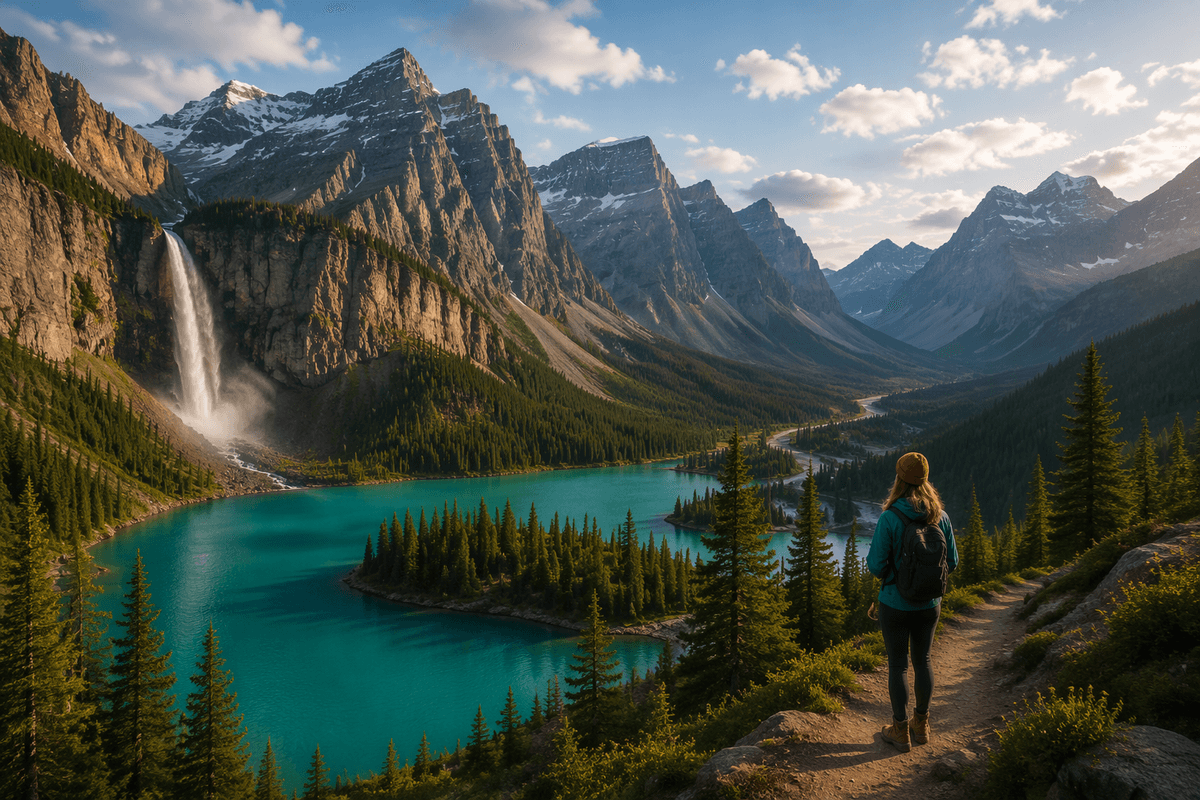
Looking beyond Banff isn’t about downgrading the scenery; it’s about buying yourself flexibility. Parks like Yoho and Kootenay can deliver the same headline Rockies moments—turquoise water, big valleys, loud waterfalls—with fewer bottlenecks, especially if you’re traveling mid-summer or on weekends. The catch is that “quieter” often means you drive more and you can’t rely on last-minute services (food, gas, open lodges) the way you can in Banff townsite.
The practical win: spreading nights across a couple of bases reduces backtracking and makes early starts realistic—though it does require choosing a pace you can actually sustain, not just pinning every famous viewpoint to the map.
Yoho National Park: waterfalls, stone bridges, quiet trails
I almost skipped Yoho because it looked like a “quick detour” on the map—until I realized it’s the rare Rockies day where you can stack big sights without living in a parking-lot lottery. Coming from Banff/Lake Louise, it’s an easy hop west over Kicking Horse Pass, but the timing matters: if you roll in late morning, Takakkaw Falls and Emerald Lake can feel nearly as busy as Lake Louise, just with less infrastructure to absorb it.
The Yoho hits that feel most worth the effort are the obvious ones, but with different friction points. Emerald Lake is the low-effort, high-payoff stop (short shoreline walks, instant color), though it’s also where you’ll feel crowds first—especially on sunny weekends. Takakkaw Falls is louder, colder, and more “dramatic per minute,” but the road can be seasonally constrained and you’ll want to check access if you’re traveling early or late in the season.
If you’re choosing between another iconic lake lineup in Banff versus a quieter half-day here, Yoho wins when you prioritize shorter trails with payoff and fewer reservations—just don’t assume you can wing food or fuel once you’re in the park.
Kootenay National Park: canyons, hot springs, big drives
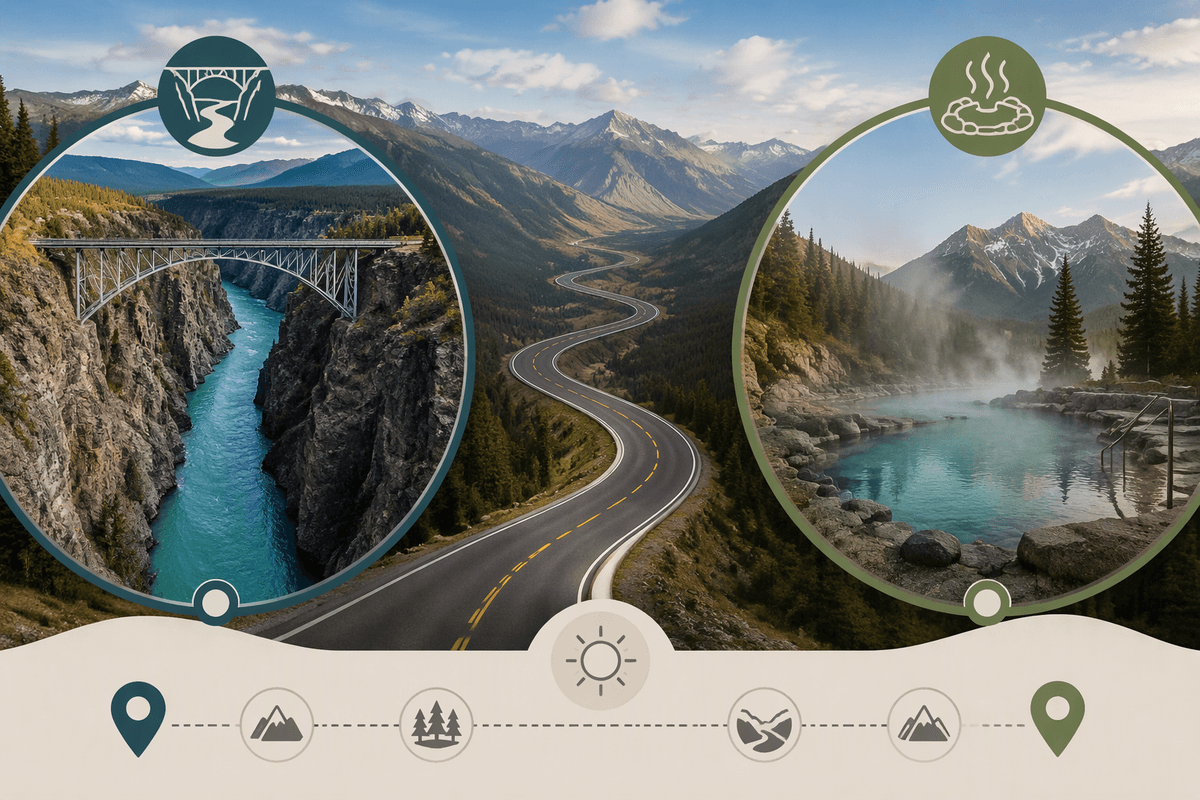
Kootenay was the day my “it’s all close together” Rockies mental map fell apart—because the park is basically a long, scenic corridor, and you feel every kilometer if you try to treat it like a quick add-on. From Banff it’s tempting to loop in via Vermilion Pass and convince yourself you’ll still have time for a lake at sunset, but between pullouts, slow wildlife traffic, and the simple fatigue of mountain driving, it’s easy to turn this into an all-day windshield tour.
The two stops that justify the effort are Marble Canyon and Radium Hot Springs, but they scratch different itches. Marble Canyon is the fast, structured payoff: short bridges, deep blue-green water, and a “wow” factor that doesn’t require a big hike—unless it’s busy, when the narrow paths can feel cramped. Radium is the opposite: you’re paying (and committing time) for a soak that feels deliberately un-Rockies—developed pools, families, and schedules—yet it’s one of the few places where you can recover from back-to-back trail days without needing perfect weather.
If you’re tight on time, Kootenay works best as a one-direction transit day (Banff to Radium/Golden) rather than a bounce-back. The scenery is there either way; the question is whether you want it with momentum, or with a lot of U-turns.
Jasper & Icefields Parkway: glaciers, lakes, stargazing
The first time I pointed the car north on the Icefields Parkway, I had that optimistic “we’ll just stop at a few viewpoints” mindset—until the first pullout with a glacier in the distance turned into a 30-minute linger, and suddenly the day’s timing got fragile. The Parkway is a highlight reel, but it’s also a slow road by design: weather swings, construction, and wildlife traffic can compress what looks like a simple drive into something you have to actively manage.
If you want one big, paid-for glacier experience, the Columbia Icefield area is the obvious commitment—memorable, but pricey, and it can feel processed compared to the more “free” roadside drama elsewhere. I found the better value move was treating the Icefields Parkway as a lake-and-walk day with flexible stops (short trails, quick photos, move on) rather than anchoring the whole plan to one timed attraction that locks you into crowds.
Jasper itself earns its nights when you’re tired of fighting for parking at peak hours. Evenings are where it shifts: the light lingers, the town feels functional (groceries, restaurants), and stargazing is genuinely doable—unless smoke rolls in or clouds park over the valley. It’s not guaranteed, which is exactly why Jasper works best with slack in the schedule, not as a single overnight sprint.
Waterton Lakes: wind, wildlife, and prairie-meets-peaks views
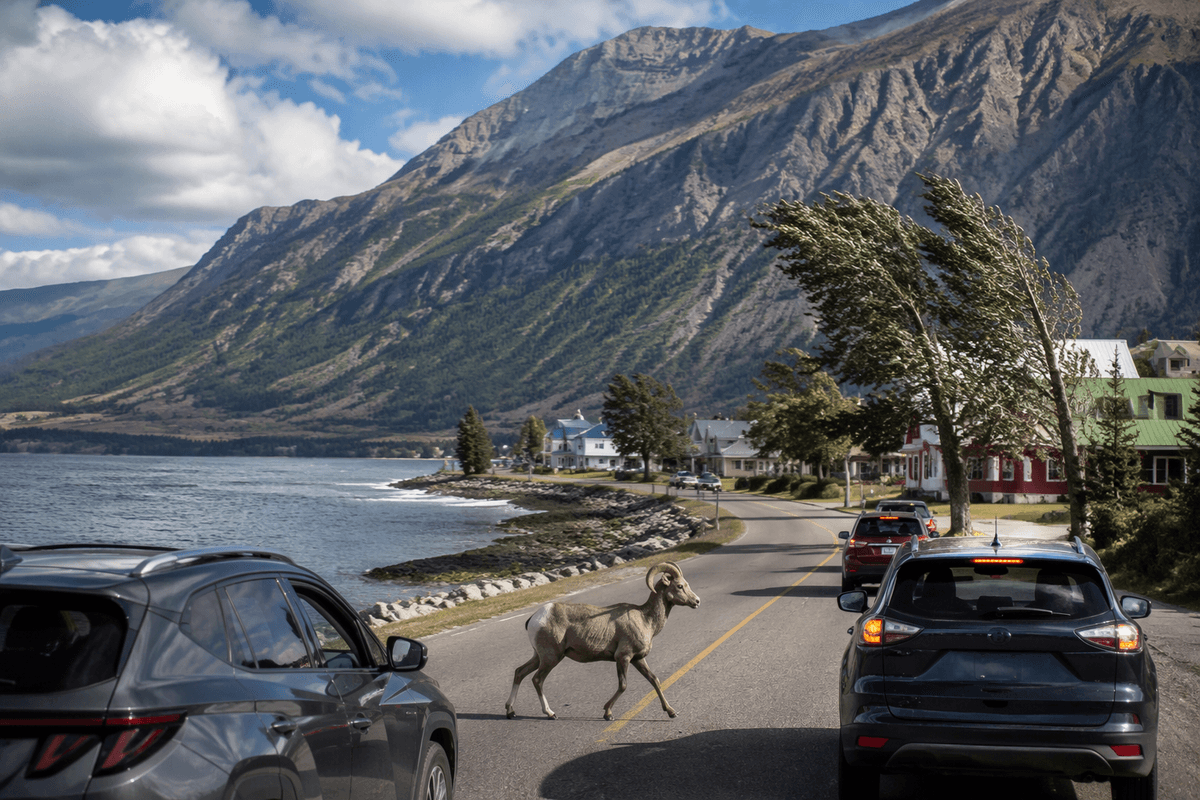
I didn’t really understand Waterton until I stepped out of the car and immediately had to brace my hat with one hand—this place can be genuinely windy in a way Banff rarely is, and it changes how the “easy” lakeside plan feels. The payoff is that the landscape reads differently: peaks rise straight out of open prairie, and the views feel wide and exposed rather than tucked into a valley. That openness is also what makes the weather more decisive; if clouds are dragging low or the wind is pushing hard off the water, you’ll want to be realistic about how long you’ll enjoy lingering outside.
Wildlife felt less like a bonus here and more like something you plan around—both for safety and for timing. Compared to the Banff corridor, Waterton’s compact townsite and fewer roads make sightings feel closer, but it also means a single closure or slow-moving animal traffic can ripple through your day. If you’re choosing where to spend limited nights, Waterton is best when you want a distinct “prairie-meets-peaks” chapter and don’t mind the extra drive to get it; it’s less satisfying as a rushed checkbox between bigger parks.
Choosing your ‘beyond Banff’ base and pace
On my own draft itinerary, the mistake was treating every park as a day trip from Banff—because “only a couple hours” turns into four-plus once you add photo pullouts, roadworks, and the mental load of mountain driving. If you want quieter without feeling constantly in transit, two bases is the sweet spot for 7–10 days: one in the Banff/Lake Louise orbit (even if that means Canmore) and one outside it.
For minimal re-planning stress, I’d choose Field or Golden for Yoho/Kootenay access (less lodge competition than Banff, but fewer dinner options and you can’t assume late-night gas), and Jasper if the Parkway is your priority (more services, but longer distances between “quick” stops). Waterton is the outlier: it’s best as 2 nights only if you’re willing to spend a full day getting there and accept wind/sudden weather as part of the deal.
Pace-wise, build in one “no-hero” day where the goal is a short walk and an early dinner—because that’s usually what saves the next morning’s start, and the Rockies reward early hours more than packed checklists.