Choosing Istanbul bases: Sultanahmet vs Beyoğlu
I kept opening hostel tabs thinking “Istanbul is compact, I’ll just walk,” and then remembered two things you feel fast here: distance isn’t flat, and neighborhoods don’t behave the same after dark. The first real choice is whether you want to wake up inside the Old City (Sultanahmet) or across the Golden Horn in Beyoğlu.
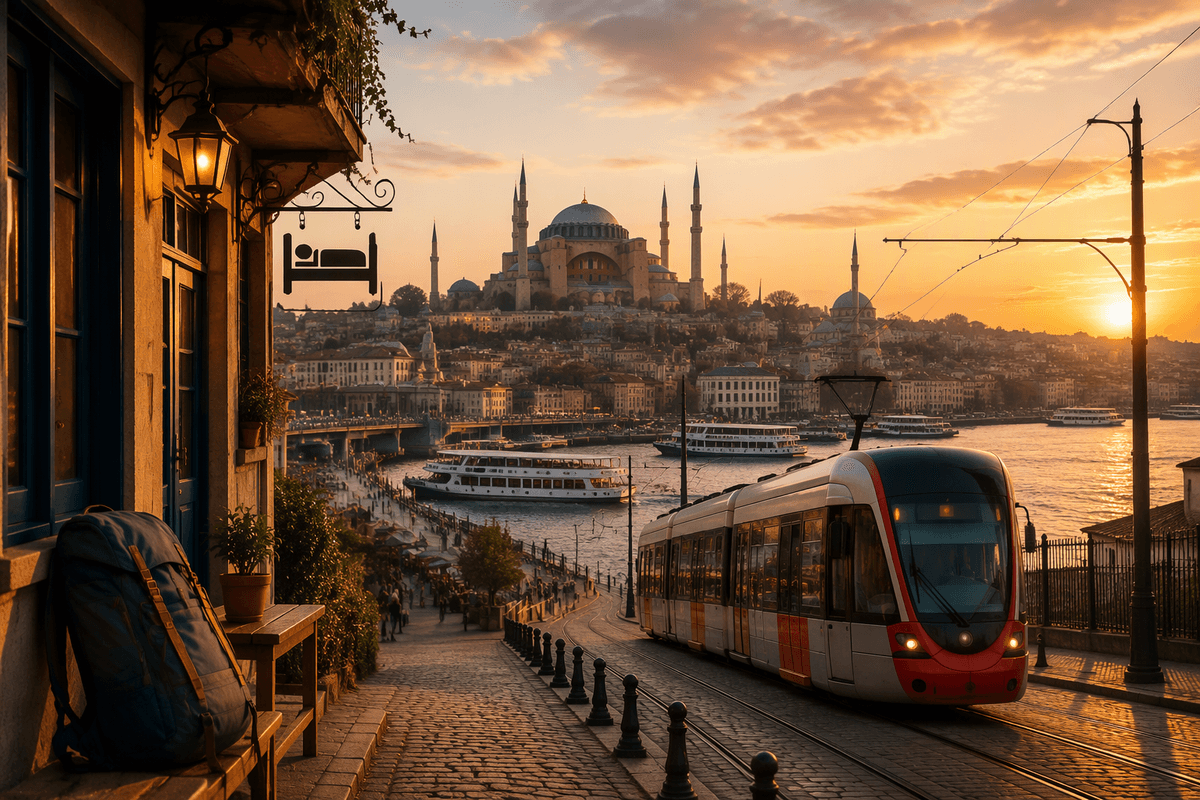
Sultanahmet wins if your priority is early, low-stress access to Hagia Sophia and the Blue Mosque—especially on busy mornings when lines and security checks are the real time sink. The evenings can feel tourist-saturated, food skews pricier, and some streets get quiet in a “everything closed” way rather than a restful way.
Beyoğlu (around Taksim/Şişhane) feels more local and lively, with better nightlife and a wider range of budget eats, but you’ll pay for it in commute friction: hills, longer transfers, and that moment when you realize “just one more museum” means another cross-city ride back to your bed.
What ‘near’ means: walk times and hills
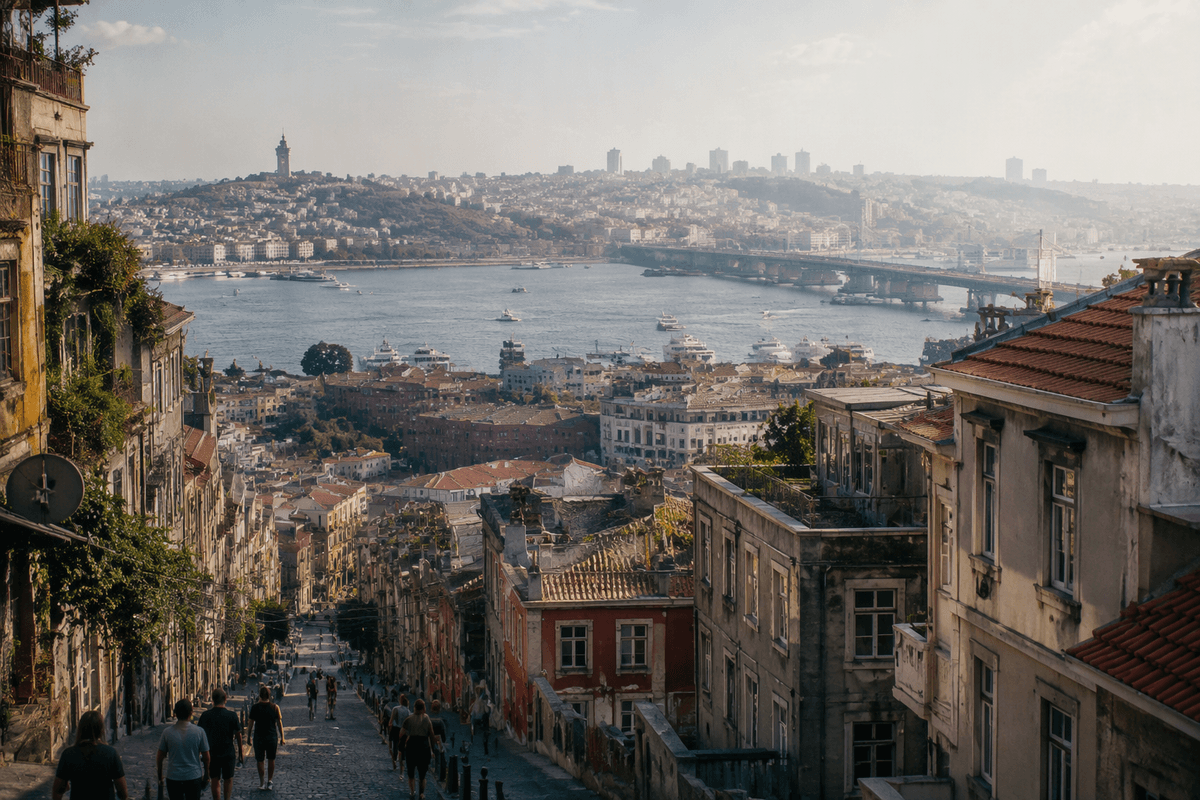
The first time a listing said “5 minutes to Sultanahmet,” I pictured an easy stroll—then checked the map and saw it was five minutes as the crow flies, plus steps, plus crowds. In Istanbul, “near” is less about kilometers and more about whether you’re crossing a hill, threading through narrow lanes, or joining the tour-group tide.
If you’re in Sultanahmet proper, Hagia Sophia and the Blue Mosque are usually a genuine 5–15 minute walk, but that same convenience can mean slow-moving sidewalks and detours around security queues. Stay a bit uphill toward Çemberlitaş and you’ll trade a slightly longer walk for better tram access and fewer dead-end streets—though you’ll feel it on the way back at night. Across the Golden Horn, “near” in Beyoğlu can still be 25–45 minutes on foot once you factor in the descent and climb; it’s doable once, but it’s a daily tax if your plan is dawn starts in the Old City.
Sultanahmet hostels for Hagia Sophia access
The night I finally stopped spreadsheeting was the night I realized I wanted one thing in the morning: to be at Hagia Sophia before my patience ran out. In Sultanahmet, the best “I can walk it” hostels are the ones tucked just behind the Hippodrome—close enough that you can roll out early, beat some of the group tours, and still pop back for a midday reset without turning it into a transit project.
What works well is the simplicity: no tram math, no uphill slog, no “should we transfer or just walk?” debates. What doesn’t is the constant background tourism. Even if your street is quiet, the area starts buzzing early, and prices for food and basics can be higher unless you walk a few blocks out. If you’re a light sleeper, aim for a hostel slightly off the main spine between Sultanahmet Square and the tram line—still walkable to the big sights, but less exposed to late-night chatter and suitcase traffic.
You’re close to the postcard stuff, but not automatically close to fast connections for evenings in Karaköy or Beyoğlu. If those nights matter, I’d prioritize being within an easy, flat walk to the tram stops rather than being “closest” to the domes.
Eminönü/Sirkeci hostels: trams, ferries, bazaars
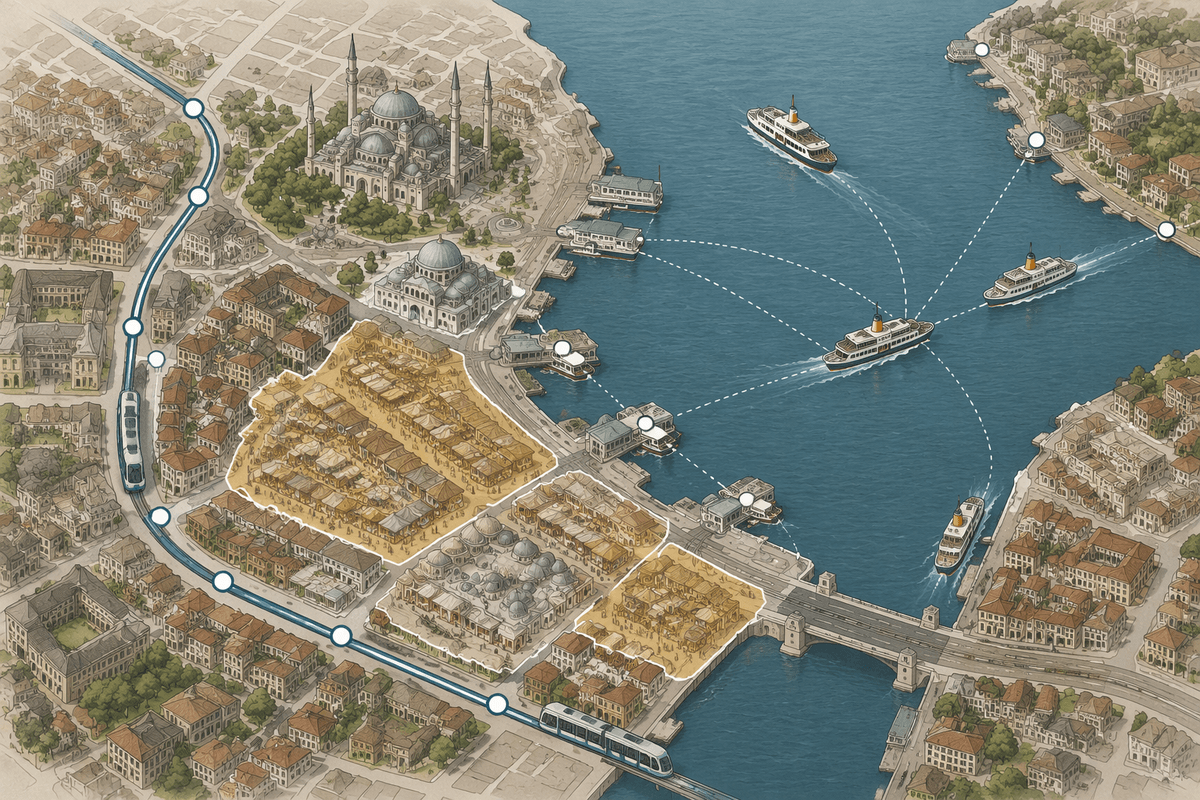
I didn’t appreciate Eminönü and Sirkeci until I missed a ferry by two minutes and still didn’t feel stranded—because in this pocket, there’s almost always another option rolling in. If your days bounce between the Old City and “one more neighborhood,” staying near the tram and ferry hubs can save you more time than shaving five minutes off the Hagia Sophia walk.
Sirkeci is the calmer bet: you’re close to the T1 tram for Sultanahmet (easy, frequent, and forgiving when you’re tired), and you can pivot to the waterfront without committing to steep climbs. Eminönü is more chaotic but brutally efficient—ferries to the Asian side, connections toward Karaköy, and the bazaars right there when you want a quick sensory hit. The trade-off is noise and crowd pressure: daytime congestion, evening cleanup, and the constant flow of people can make “rest” feel like a skill. If you’re booking here, I’d choose a hostel one or two streets back from the main roads—close enough to sprint for transport, far enough that you’re not sleeping inside the commute.
Karaköy/Galata hostels: metro links and nightlife
The first time I tried to “just walk back” from Karaköy after dinner, I learned the neighborhood’s real price tag: stairs, steep lanes, and the kind of uphill that turns a casual night into a leg workout. Still, Karaköy and Galata are the most efficient base I found for mixing Old City mornings with Beyoğlu nights without feeling like you’re commuting between two different trips.
What works well here is the connectivity. You’re close to the waterfront crossings, and you can pivot fast toward Şişhane/Taksim-side plans via rail links, then drop back down toward the Golden Horn when you want ferries or the tram spine. The Old City is reachable, but it’s rarely a pure “throw on shoes and go” walk to Hagia Sophia—expect a longer, slower approach than Sultanahmet, especially if you’re crossing bridges in peak hours.
Karaköy can run late, and hostel streets that feel charming at 6 p.m. can be loud at 1 a.m. If you’re sensitive to sound, I’d choose Galata’s side streets over the busiest strips, and prioritize a place that’s close enough to transit that you don’t have to choose between nightlife and a safe, tiring hike home.
Transit checklist: Istanbulkart, late-night options, airport routes
The only time Istanbul transit felt “hard” was when I treated it like a one-off purchase every ride. Get an Istanbulkart early (the machines at major tram/metro stations are the least stressful), top it up more than you think you’ll need, and keep a small buffer for the day you take one extra ferry “just because.” It’s the difference between smooth transfers and standing at a turnstile with a dead card while your friends drift through.
Late-night is where your hostel location quietly starts charging interest. Trams and metros thin out, some lines stop earlier than you expect, and “we’ll just walk” can turn into a long bridge crossing or a steep climb when you’re already tired. If you’re staying in Karaköy/Galata or Beyoğlu, budget for an occasional taxi/ride-hail back rather than forcing a midnight uphill. From Sultanahmet/Sirkeci, it’s usually easier to bail out early and still get home without drama.
For airports, plan the route before you book the bed: the cheapest-looking hostel isn’t a deal if it adds two transfers with luggage. I’d pick a place within an easy, flat walk of a major tram/metro hub (Sirkeci/Eminönü edges, or well-positioned Karaköy) so you can move at your pace—especially on departure mornings when every extra connection becomes a gamble.
Final pick: balance price, quiet, and commute
I ended up treating my “final pick” like a three-way trade: how often I wanted sunrise Old City starts, how late I expected my nights to run, and how much noise I could realistically sleep through. The cheapest bed isn’t cheap if you’re paying in extra rides, lost time, or that exhausted decision fatigue at midnight when the last easy option is gone.
If Hagia Sophia and the Blue Mosque are the anchor of your days, I’d choose Sultanahmet only if the hostel is also an easy, straightforward walk to the tram—close enough for early entries, but not so deep in the lanes that every return feels like a maze. If you’re mixing neighborhoods daily (and want ferries without planning your whole day around them), Sirkeci is the “quiet efficiency” compromise: fewer hills, fewer late-night surprises, and quick resets back at the hostel. For travelers who care most about evenings in Beyoğlu, Karaköy or Galata wins on connectivity, but I’d pay a little more for a side-street location so you’re not trying to sleep over the party.
My practical takeaway: pick the area that makes your most frequent trip the easiest—then spend your budget on lowering friction (short walks to transit, calmer streets), not on being “closest” on a listing map.