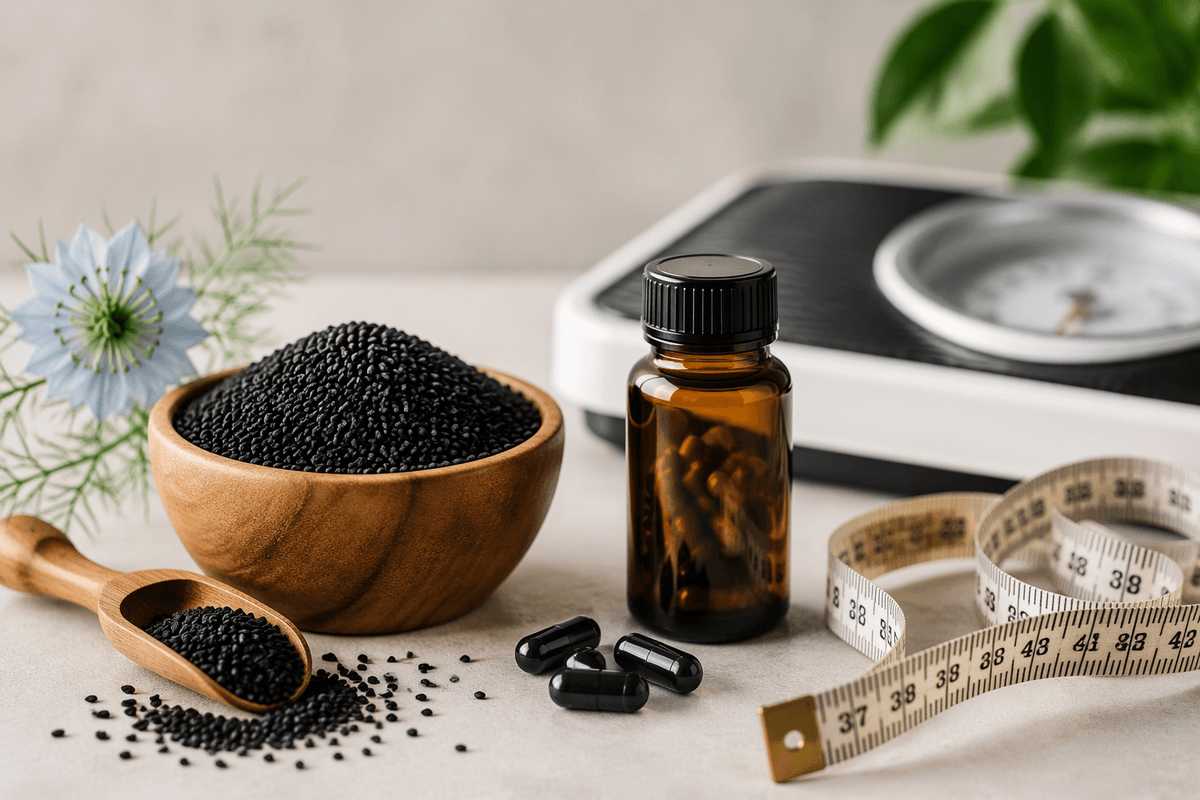
What Black Cumin Seed Can Realistically Do
The change may be easy to overread: a slightly looser waistband, a lower number on the scale, or fewer cravings in the afternoon. Black cumin seed may contribute to small shifts like these for some people, but it is unlikely to produce dramatic fat loss on its own. Any effect may be modest, inconsistent, and difficult to separate from changes happening at the same time.
For example, someone taking black cumin seed may also begin eating smaller portions, walking more often, or paying closer attention to meals. Early weight changes can also reflect fluid shifts, while waist measurements vary with timing, clothing, and how the tape is placed. That does not make the supplement irrelevant, but it does place it in a more realistic role: a possible minor influence within a broader pattern of eating, activity, sleep, and routine. If those habits remain unchanged, relying on the supplement alone may lead to disappointing results.
Why the Evidence Looks Promising but Limited

A promising result can still feel underwhelming in daily life. In studies of black cumin seed, some participants show small reductions in weight, waist size, or related measurements, while others see little noticeable change. The differences may come from the amount used, how long it was taken, the form of the product, or the participants’ starting habits. When the average change is small, an individual result can also be hidden by normal fluctuations in water, digestion, and meal timing.
There is another complication: research settings do not always resemble ordinary routines. Participants may receive structured meals, health guidance, regular follow-up, or encouragement to stay consistent, making it difficult to identify how much change came from black cumin seed itself. Studies may also be short or involve relatively few people, so a result that looks encouraging is not necessarily a dependable prediction for everyone. The evidence is useful as a reason for interest, but not strong enough to treat the supplement as a stand-alone fat-loss method. Its possible contribution makes more sense when viewed alongside appetite, activity, food choices, and measurements tracked over several weeks.
The Metabolic Changes Researchers Are Tracking
The scale may stay almost unchanged while other measurements shift quietly. Researchers are often watching blood sugar control, insulin response, blood fats, waist circumference, and markers related to inflammation rather than focusing only on pounds lost. Black cumin seed has been studied in connection with some of these measures, but the findings are not uniform, and a laboratory change does not automatically translate into visible fat loss or a different clothing size.
These changes are also difficult to interpret outside a controlled setting. Eating fewer refined carbohydrates, losing a small amount of weight, exercising more regularly, or simply following a more consistent routine can affect the same metabolic markers. The results may differ depending on whether measurements are taken after fasting, during a period of weight fluctuation, or after several weeks of use. For someone tracking progress, improved energy or steadier hunger may be useful observations, but they are not reliable proof that the supplement is changing metabolism. The pattern becomes more meaningful when waist size, eating habits, activity, and repeated measurements move in the same direction.
When a Reasonable Addition Causes Problems
The first warning may be surprisingly ordinary: nausea after breakfast, a burning feeling in the stomach, or a sudden change in bowel habits. Black cumin seed is often viewed as a harmless addition because it is familiar as a food, but concentrated oils and supplements can feel different from the small amounts used in cooking. Discomfort may make meals less appealing, yet that is not the same as a helpful reduction in appetite. Eating less because the stomach feels unsettled can be difficult to maintain and may leave someone tired, distracted, or more likely to overeat later.
Other problems are easier to miss. A supplement may be taken alongside medicines, another herbal product, or a diet that has already changed substantially. In that setting, dizziness, unusual fatigue, or digestive symptoms may be blamed on the wrong factor. Product strength and serving size can also vary, making experiences inconsistent. If symptoms begin after starting black cumin seed or continue as the dose increases, treating the reaction as evidence that it is “working” may obscure a more practical concern: the addition may not fit comfortably into the person’s routine.
Food, Oil, and Supplements Are Not Equivalent
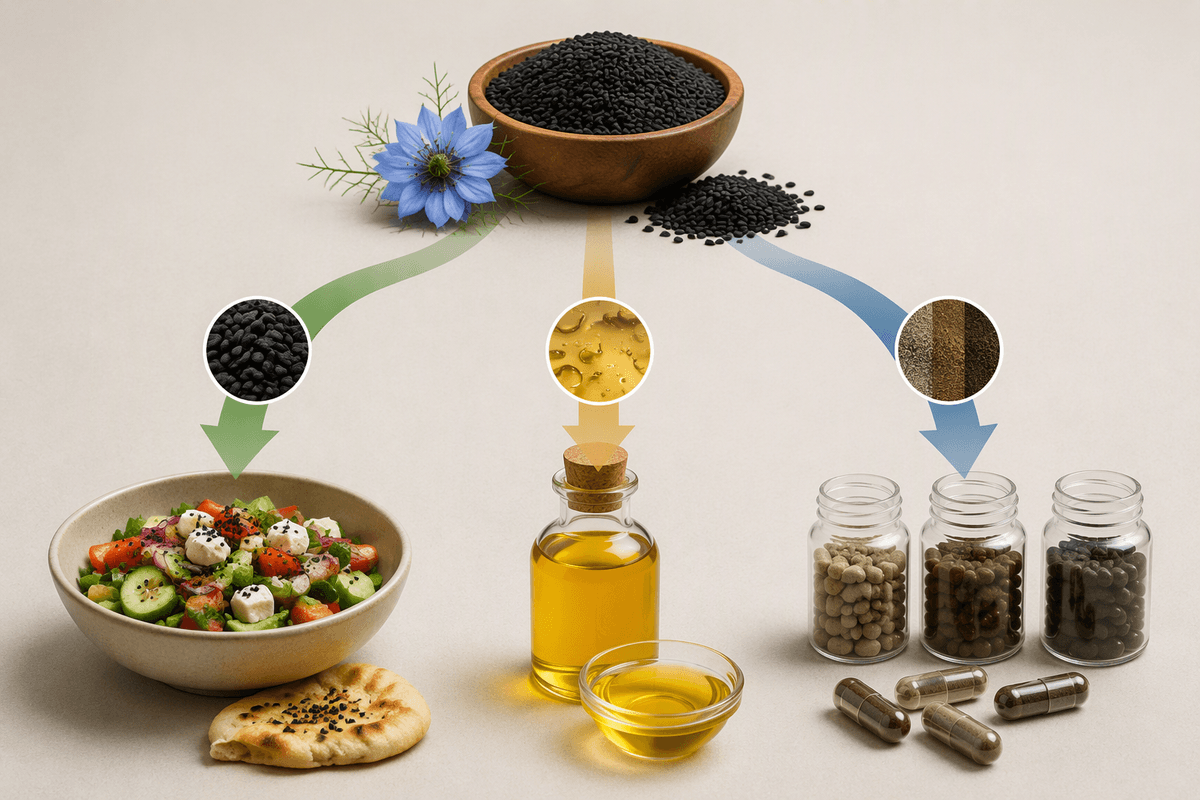
A sprinkle of black cumin seed on food can seem interchangeable with a spoonful of oil or a capsule, but the experience may be quite different. Food usually provides a smaller, less concentrated amount, along with the meal itself. Oil can deliver more of the seed’s compounds in a measured serving, while capsules may contain concentrated extracts whose strength varies by product. These differences can affect taste, digestion, appetite, and how easy it is to take more than intended.
That distinction also complicates weight changes. Someone adding the seed to meals may change recipes or feel more satisfied, while someone taking oil may add calories without noticing. A supplement user may follow a fixed serving but still receive an amount that does not match another brand’s product. Labels, preparation, and serving sizes are not always consistent, and research findings from one form cannot automatically be applied to another. A small change in hunger or waist size is therefore easier to interpret when the exact form, amount, and surrounding eating pattern have stayed fairly steady.
The Bigger Pattern Behind Any Weight Change
The scale can move after starting black cumin seed, but the reason may be less direct than it first appears. A person might feel slightly less hungry, prepare fewer snacks, walk more consistently, or become more attentive to portions simply because the supplement creates a sense of commitment. Those changes can matter, even if black cumin seed itself has only a small effect. On the other hand, a lower number may reflect reduced water retention, a lighter meal the night before, or normal digestive variation.
Looking at the broader pattern helps prevent either conclusion from being overstated. Waist size, appetite, food choices, activity, sleep, and repeated weigh-ins over several weeks provide more context than a single encouraging result. If habits are unchanged and measurements remain inconsistent, the supplement may not be doing much that is visible. If several behaviors improve together, it becomes difficult to assign the outcome to one capsule or serving alone. The useful question is often not whether black cumin seed caused the change, but whether the overall routine is becoming easier to sustain.
How to Interpret the Choice Safely
The capsule may seem easier to judge when the scale changes quickly, but a safer interpretation usually takes more time. Notice whether appetite, meal patterns, activity, and waist measurements are changing together rather than treating one weigh-in as proof. Keeping the product, serving, and routine relatively consistent can make observations less confusing, although normal fluctuations will still occur. A short-term drop may reflect water or digestion, while a gradual pattern that continues across several weeks offers more useful context.
It is also reasonable to question whether the supplement is adding enough benefit to justify its cost, inconvenience, or discomfort. If nausea, dizziness, unusual fatigue, or other new symptoms appear, the choice may not be suitable, particularly when medicines or other supplements are involved. Black cumin seed may be a limited contributor for some adults, but it should not carry responsibility for the entire result. The clearest sign of progress is usually a routine that remains manageable even when the supplement is no longer the main focus.