Why More Variety Can Encourage More Eating
At a buffet, you may feel comfortably full after one plate, then notice your attention shift when a different dish appears. The first flavors have become familiar, but the new smell, texture, or seasoning can make eating feel appealing again. This does not necessarily mean hunger has returned. Interest can be renewed even while the body’s need for more food is gradually fading.
The effect is easy to miss in everyday settings. A snack drawer with several options, a party table, or a meal built from many energy-dense ingredients can encourage small returns: one more cracker, another handful, a taste of something sweet. Each choice may seem minor, yet the assortment keeps the eating experience active and makes stopping less obvious. Variety can be useful when it brings vegetables, grains, proteins, and other foods into the diet, but it can also extend grazing when every change in flavor offers a fresh reason to continue. But intake may rise without a clear moment that feels excessive.
The Sensory-Specific Satiety Effect Changes With Variety
After several bites of the same food, its flavor may become less compelling even though other foods still sound appealing. A sandwich can lose some of its pull while the smell of chips, fruit, or dessert suddenly seems more interesting. This is often described as sensory-specific satiety: satisfaction increases for the food being eaten, but not necessarily for foods with different tastes, textures, or aromas.
Variety can therefore change how fullness is experienced. When a meal moves from savory to sweet, soft to crunchy, or mild to strongly seasoned, each contrast may feel like a fresh eating opportunity. The effect is not perfectly consistent; appetite, stress, portion size, and the pace of eating all matter. Still, it helps explain why someone may stop wanting more of one dish yet continue sampling others. At a gathering, this can turn ordinary fullness into repeated grazing, especially when energy-dense options are spread across the table. The body may be receiving enough food, while attention remains engaged by what has not yet been tasted.
Healthy Diversity Can Still Create Excess Intake
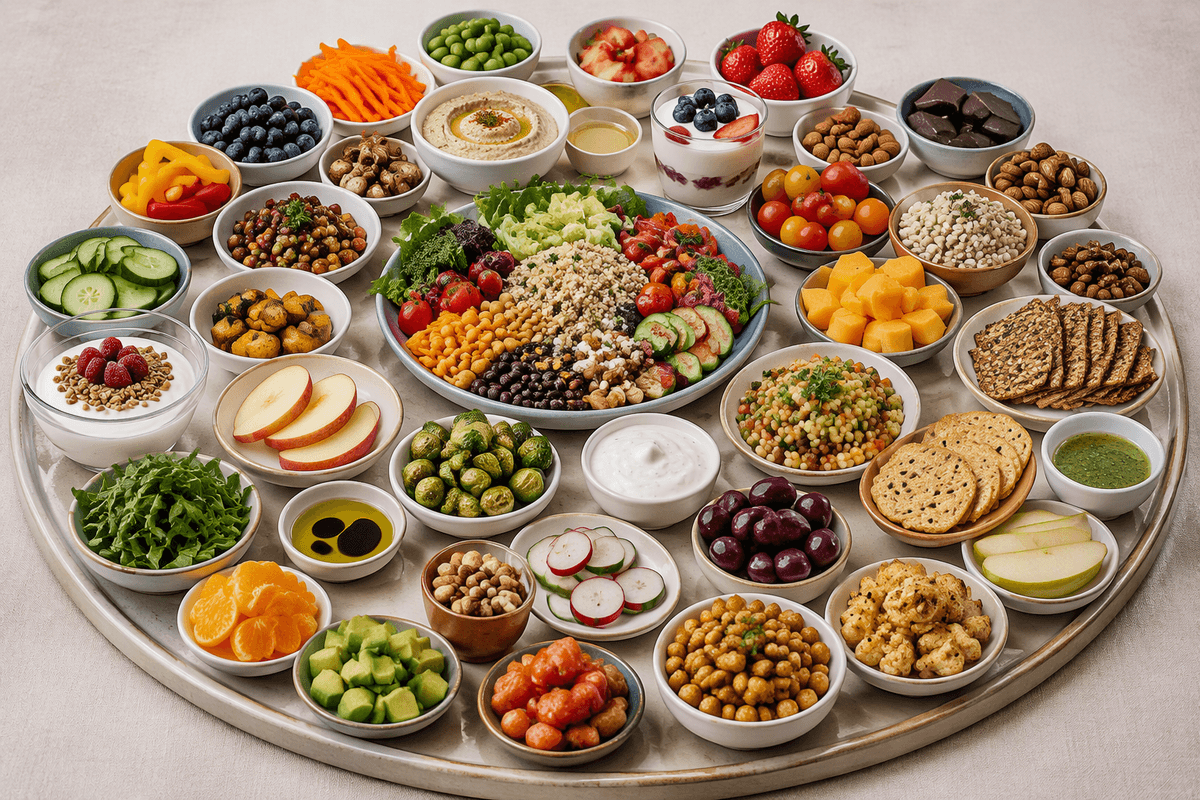
The plate can look balanced and still make it easy to eat more than intended. Roasted vegetables, grains, beans, fruit, and a few sauces may provide useful nutritional range, yet each addition also brings a new flavor or texture to explore. When richer ingredients appear alongside them—cheese, oils, dressings, nuts, or sweet toppings—the meal can remain interesting long after basic hunger has eased. The concern is not that variety is harmful, but that a nutritious assortment can quietly become a larger total meal.
The same pattern appears in snack-heavy settings. Someone may begin with fruit or yogurt, add a few nuts, then return for crackers or chocolate because each item feels like a separate, reasonable choice. Since no single portion seems excessive, the overall amount can be difficult to notice. Eating may continue through curiosity, convenience, or the thought of balancing the previous choice with something else. Inconsistent hunger signals and social surroundings make this harder to judge, so “healthy variety” does not always correspond to eating only what the body needs.
How Food Environments Turn Choice Into Momentum
By the time you notice you are still eating, the surroundings may already have made stopping feel less natural. A bowl remains within reach, another option is visible, and conversation fills the pauses between bites. In a buffet line, each tray invites a small decision; at home, several open packages can create the same pattern. None of these choices has to feel urgent, but together they keep attention pointed toward food.
This can turn variety into momentum. After finishing one item, the next choice may seem like a harmless change rather than additional eating. A person may move from savory snacks to something sweet, then return to a favorite because it now feels more appealing than the first option. Portions become harder to track when food is shared, packaged in small amounts, or eaten while standing. Hunger may be only part of the reason eating continues, while convenience, visibility, and social cues quietly carry the pattern forward. The environment does not remove choice, but it can make repeated choice feel automatic.
When Adding Balance Produces Unexpected Discomfort

Even a carefully balanced meal may cause unexpected discomfort. Adding beans to a grain bowl, vegetables to a rich dish, or several fiber-rich ingredients at once increases the amount of food the digestive system needs to process. When these changes happen suddenly, fullness, bloating, or heaviness may follow, even when the portion seems reasonable. Extra ingredients may also make a meal more appealing, encouraging continued tasting long after physical hunger has eased.
Physical fullness does not always bring an immediate end to the desire to eat. The stomach may feel stretched or unsettled while appealing flavors, sauces, toppings, and contrasting textures keep attention on the food. Individual tolerance adds another variable: the same combination may sit comfortably one day and cause discomfort the next, depending on portion size, eating speed, and what else was consumed. A balanced meal therefore involves more than including a variety of food groups. The amounts, combinations, and pace of eating also matter, as does how comfortably the meal is tolerated afterward.
Appetite, Fullness, And Variety Are Not Identical
After a varied meal, you may notice a confusing split: your stomach feels comfortably occupied, yet another flavor still sounds appealing. Fullness describes physical signals that food has been received, while appetite can remain responsive to smell, novelty, habit, or the sight of something enjoyable. These sensations often overlap, but they do not always rise and fall together. A person can feel physically satisfied and still want dessert, or feel only partly full while losing interest in the food available.
This distinction helps explain grazing and the familiar thought of “just one more.” Returning to a snack may reflect renewed interest rather than a clear need for energy, particularly when each option offers a different taste or texture. Appetite also shifts with stress, tiredness, social cues, and the pace of eating, so it is not a perfectly reliable guide in every situation. Variety can support a broader diet, but it may also keep attention focused on what remains available. Noticing that desire and fullness can coexist makes the pattern easier to interpret without treating either sensation as a complete answer.
Finding A More Useful Meaning Of Diversity
At the end of a meal, diversity may be more useful when it describes the range of foods eaten across days rather than the number of choices placed in front of you at one time. A varied diet does not require every meal to contain many flavors, toppings, or snack options. Sometimes a simpler plate provides enough contrast to feel satisfying without keeping attention engaged through repeated sampling.
This broader view leaves room for both nutrition and comfort. Vegetables, grains, proteins, fruits, and other foods can appear across meals in different combinations, while richer or highly tempting foods do not need to be treated as failures when they lead to extra eating. The practical question is often less about whether a meal contains variety and more about whether the assortment supports a comfortable stopping point. If grazing, returning for “just one more,” or eating past fullness happens mainly when many options remain available, the pattern may reflect sustained interest rather than missing nourishment. Diversity can still be valuable, but it works best when it expands the diet without making continued eating feel like the natural next choice.